
The USA is one of the most popular study destinations for Indian students because of its wide range of universities, flexible courses, research opportunities, and strong career pathways. However, getting a USA student visa requires careful preparation. Students need to understand the F-1 visa process, Form I-20, SEVIS fee, required documents, proof of funds, and visa interview.
For eligible students, work pathways such as OPT can also provide opportunities to gain practical experience after completing their studies. This guide explains the USA F-1 student visa process for Indian students in 2026, including the key steps, documents, costs, timeline, interview preparation, and common mistakes to avoid.
For eligible students, work pathways such as OPT can also provide opportunities to gain practical experience after completing their studies. This guide explains the USA F-1 student visa process for Indian students in 2026, including the key steps, documents, costs, timeline, interview preparation, and common mistakes to avoid.
What Is the F-1 Student Visa?
The F-1 visa is the main U.S. student visa for international students studying academic programs such as bachelor's degrees, master's degrees, PhD programs, and eligible language courses. For most Indian students planning to study at a U.S. university or college, the process generally includes:
• Getting admission to an SEVP-certified school
• Receiving Form I-20 after the school enters your details in SEVIS
• Paying the I-901 SEVIS fee, where required
• Completing the DS-160 visa application
• Paying the visa application fee and scheduling an interview
• Attending the visa interview
Students should also understand that a visa does not automatically guarantee entry into the USA. It allows the student to request admission at a U.S. port of entry. Students planning to pursue a U.S. degree should apply for the appropriate student visa rather than using a visitor visa, as degree-level study is generally not permitted on a visitor visa.
• Getting admission to an SEVP-certified school
• Receiving Form I-20 after the school enters your details in SEVIS
• Paying the I-901 SEVIS fee, where required
• Completing the DS-160 visa application
• Paying the visa application fee and scheduling an interview
• Attending the visa interview
Students should also understand that a visa does not automatically guarantee entry into the USA. It allows the student to request admission at a U.S. port of entry. Students planning to pursue a U.S. degree should apply for the appropriate student visa rather than using a visitor visa, as degree-level study is generally not permitted on a visitor visa.
Step 1: Choose an SEVP-Certified School
The F-1 visa process begins with choosing the right university or college. Before applying, students should check:
• whether the school is SEVP-certified
• whether the course matches their academic background
• the total tuition and living costs
• whether the program supports their career goals
• scholarship, assistantship, or funding opportunities
• the cost of living in the location
• internship, research, CPT, or practical training opportunities, where relevant
The right university should fit your academic goals, budget, personal situation, and future career plans. Choosing a university only because admission is easier or the ranking is high may not always be the best decision.
• whether the school is SEVP-certified
• whether the course matches their academic background
• the total tuition and living costs
• whether the program supports their career goals
• scholarship, assistantship, or funding opportunities
• the cost of living in the location
• internship, research, CPT, or practical training opportunities, where relevant
The right university should fit your academic goals, budget, personal situation, and future career plans. Choosing a university only because admission is easier or the ranking is high may not always be the best decision.
Step 2: Receive Form I-20
After you are admitted and your financial information is reviewed, the SEVP-certified school issues Form I-20, also known as the Certificate of Eligibility for Nonimmigrant Student Status.
This document is essential for the F-1 visa process and includes important details such as:
• SEVIS ID
• school and program information
• degree level
• program start and end dates
• estimated cost of attendance
• funding information
Before paying the SEVIS fee or completing your visa application, carefully check the details on your I-20. Your name, date of birth, program, funding information, and start date should be accurate.
This document is essential for the F-1 visa process and includes important details such as:
• SEVIS ID
• school and program information
• degree level
• program start and end dates
• estimated cost of attendance
• funding information
Before paying the SEVIS fee or completing your visa application, carefully check the details on your I-20. Your name, date of birth, program, funding information, and start date should be accurate.
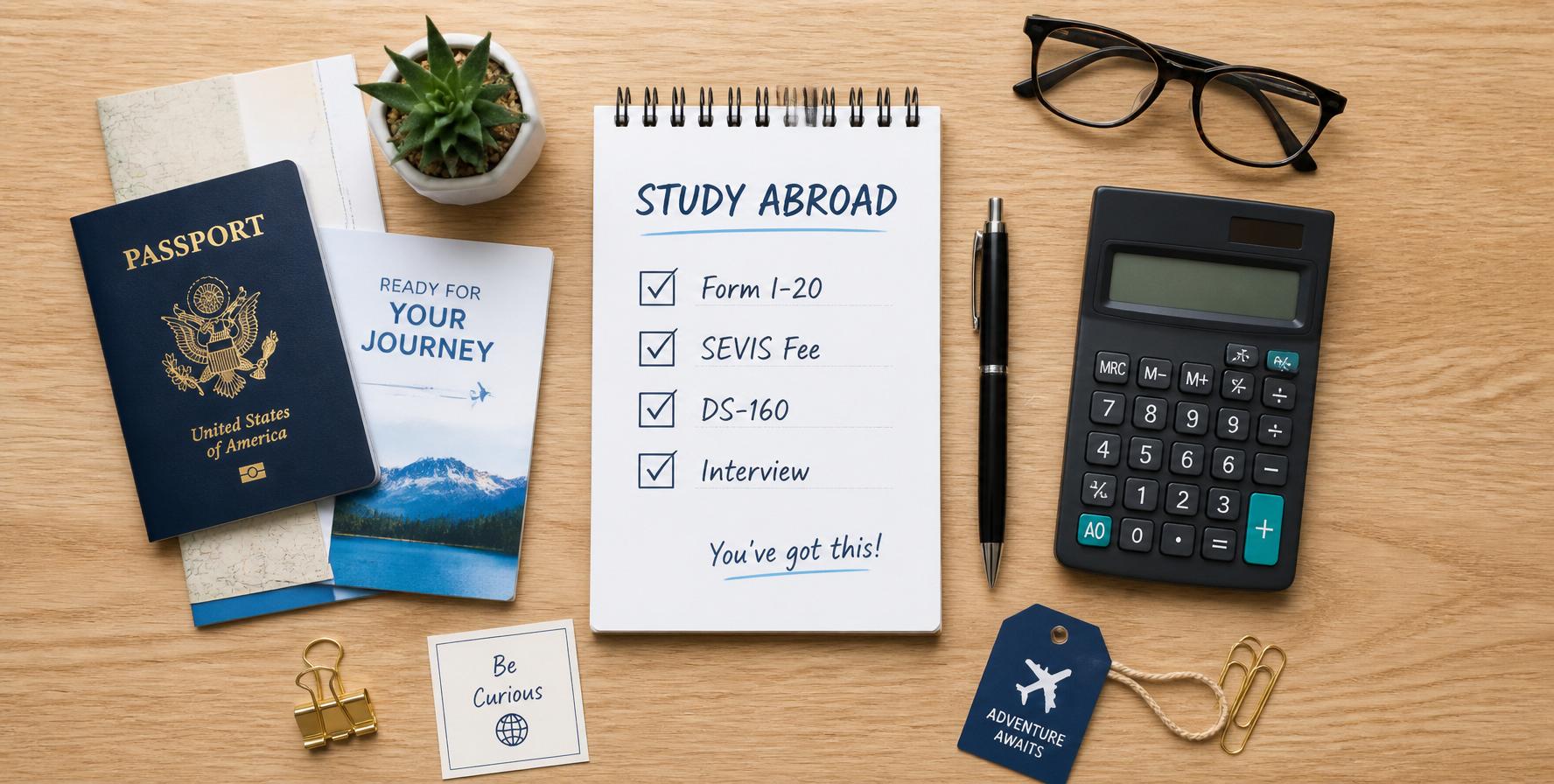
Step 3: Pay the I-901 SEVIS Fee
The I-901 SEVIS fee is a separate fee paid by eligible prospective F-1 and M-1 students before the visa can be issued. The fee is separate from:
• the university application or tuition fees
• the visa application fee
• other travel or document expenses
When checked, the official SEVIS fee for F and M visa applicants was USD 350. You generally need details from your Form I-20, including your SEVIS ID and school information, to complete the payment. Keep the payment confirmation safely because it may be required during the visa process.
• the university application or tuition fees
• the visa application fee
• other travel or document expenses
When checked, the official SEVIS fee for F and M visa applicants was USD 350. You generally need details from your Form I-20, including your SEVIS ID and school information, to complete the payment. Keep the payment confirmation safely because it may be required during the visa process.
Step 4: Complete the DS-160 Form
The DS-160 is the online nonimmigrant visa application form. Students must complete it carefully and provide accurate information. The form may ask about:
• personal and family details
• education and work history
• travel plans
• previous international travel
• school and program information
• SEVIS details
• security and background information
Your DS-160 should be consistent with your admission documents, Form I-20, and personal history. Do not rush through the form or provide information that you cannot explain during the visa interview.
• personal and family details
• education and work history
• travel plans
• previous international travel
• school and program information
• SEVIS details
• security and background information
Your DS-160 should be consistent with your admission documents, Form I-20, and personal history. Do not rush through the form or provide information that you cannot explain during the visa interview.
Step 5: Pay the Visa Fee and Schedule the Interview
After completing the DS-160, students must follow the official instructions for paying the visa application fee and scheduling their interview. When checked, the U.S. Department of State listed the student visa application fee as USD 185. Students should verify the latest fee and payment instructions before applying.
Interview appointment availability can vary depending on the location, season, and demand. Students should therefore avoid waiting until the last minute. New F-1 and M-1 student visas can generally be issued up to 365 days before the program start date. However, students cannot enter the USA more than 30 days before their program begins.
Interview appointment availability can vary depending on the location, season, and demand. Students should therefore avoid waiting until the last minute. New F-1 and M-1 student visas can generally be issued up to 365 days before the program start date. However, students cannot enter the USA more than 30 days before their program begins.
Step 6: Prepare Your Visa Interview Documents
Students should prepare a well-organized file with their essential documents. Common documents include:
• valid passport
• DS-160 confirmation page
• visa fee payment receipt, where required
• Form I-20 signed as required
• I-901 SEVIS fee receipt
• photograph, if required
Students may also need documents showing:
• academic qualifications and transcripts
• degrees, diplomas, or certificates
• required test scores
• financial ability to pay tuition and living costs
• a clear academic purpose and future plan
The visa officer may not ask for every document. However, students should be prepared to provide any relevant document if requested.
• valid passport
• DS-160 confirmation page
• visa fee payment receipt, where required
• Form I-20 signed as required
• I-901 SEVIS fee receipt
• photograph, if required
Students may also need documents showing:
• academic qualifications and transcripts
• degrees, diplomas, or certificates
• required test scores
• financial ability to pay tuition and living costs
• a clear academic purpose and future plan
The visa officer may not ask for every document. However, students should be prepared to provide any relevant document if requested.
Step 7: Prepare for the Visa Interview

The visa interview is an opportunity for the officer to understand your study plan and assess whether your application is genuine and consistent. Be prepared to explain:
• why you chose this university
• why you selected this particular course
• how the course connects to your academic background
• why you want to study in the USA
• how your education will be funded
• what your future plans are
• how you understand your responsibilities as an F-1 student
Avoid memorising long, scripted answers. Students should answer clearly, honestly, and confidently. A genuine student who understands their university, course, finances, and future plans is usually better prepared than someone simply repeating prepared answers.
• why you chose this university
• why you selected this particular course
• how the course connects to your academic background
• why you want to study in the USA
• how your education will be funded
• what your future plans are
• how you understand your responsibilities as an F-1 student
Avoid memorising long, scripted answers. Students should answer clearly, honestly, and confidently. A genuine student who understands their university, course, finances, and future plans is usually better prepared than someone simply repeating prepared answers.
Proof of Funds for a USA Student Visa
There is no single fixed amount that every F-1 student must show as proof of funds. The required amount generally depends on the university's estimated cost of attendance shown on the Form I-20 and the student's overall funding plan.
Students may use documents such as:
• Bank statements
• Education loan sanction letters
• Scholarship or assistantship letters
• Sponsor income proof
• Tax documents
• Fixed deposit evidence, where applicable
• Sponsor letters or affidavits, where suitable
• Property or other asset documents, where relevant
The main purpose is to show that the student has a realistic plan to pay for tuition, living expenses, and travel costs during the proposed period of study. Financial documents should be genuine, consistent, and easy to explain. Students should also be prepared to explain who is funding their education and how the overall study plan will be financed.
Students may use documents such as:
• Bank statements
• Education loan sanction letters
• Scholarship or assistantship letters
• Sponsor income proof
• Tax documents
• Fixed deposit evidence, where applicable
• Sponsor letters or affidavits, where suitable
• Property or other asset documents, where relevant
The main purpose is to show that the student has a realistic plan to pay for tuition, living expenses, and travel costs during the proposed period of study. Financial documents should be genuine, consistent, and easy to explain. Students should also be prepared to explain who is funding their education and how the overall study plan will be financed.
Can F-1 Students Work in the USA?
F-1 students can work in the USA, but employment rules are strict. Students cannot simply arrive in the country and take any job they choose. Common authorized work categories include:
• On-campus employment
• Curricular Practical Training (CPT)
• Optional Practical Training (OPT)
• STEM OPT Extension for eligible STEM graduates
• Limited off-campus employment through specific authorized programs
Students should always check their eligibility and speak with their Designated School Official (DSO) before starting work. Unauthorized employment can seriously affect a student's F-1 status and future immigration opportunities. Part-time work should also not be treated as the primary source of funding for tuition or the overall cost of studying in the USA.
• On-campus employment
• Curricular Practical Training (CPT)
• Optional Practical Training (OPT)
• STEM OPT Extension for eligible STEM graduates
• Limited off-campus employment through specific authorized programs
Students should always check their eligibility and speak with their Designated School Official (DSO) before starting work. Unauthorized employment can seriously affect a student's F-1 status and future immigration opportunities. Part-time work should also not be treated as the primary source of funding for tuition or the overall cost of studying in the USA.
Common USA Student Visa Mistakes
Many visa problems come from avoidable mistakes. Students should be careful to avoid:
• Choosing a university only because admission is easy
• Not checking whether the institution is SEVP-certified
• Using unclear or inconsistent financial documents
• Treating the DS-160 form casually
• Memorising artificial or scripted interview answers
• Not understanding how the course connects to their background
• Hiding previous visa refusals or important travel history
• Depending on part-time work to fund tuition or the entire degree
• Booking non-refundable travel before visa approval
• Ignoring important details on the Form I-20, including program dates
Your F-1 visa application should present a clear and consistent story: you are academically prepared, genuinely planning to study, financially ready, admitted to a suitable program, and aware of your responsibilities as an international student.
• Choosing a university only because admission is easy
• Not checking whether the institution is SEVP-certified
• Using unclear or inconsistent financial documents
• Treating the DS-160 form casually
• Memorising artificial or scripted interview answers
• Not understanding how the course connects to their background
• Hiding previous visa refusals or important travel history
• Depending on part-time work to fund tuition or the entire degree
• Booking non-refundable travel before visa approval
• Ignoring important details on the Form I-20, including program dates
Your F-1 visa application should present a clear and consistent story: you are academically prepared, genuinely planning to study, financially ready, admitted to a suitable program, and aware of your responsibilities as an international student.
How Stack Learn Helps With USA Visa Readiness
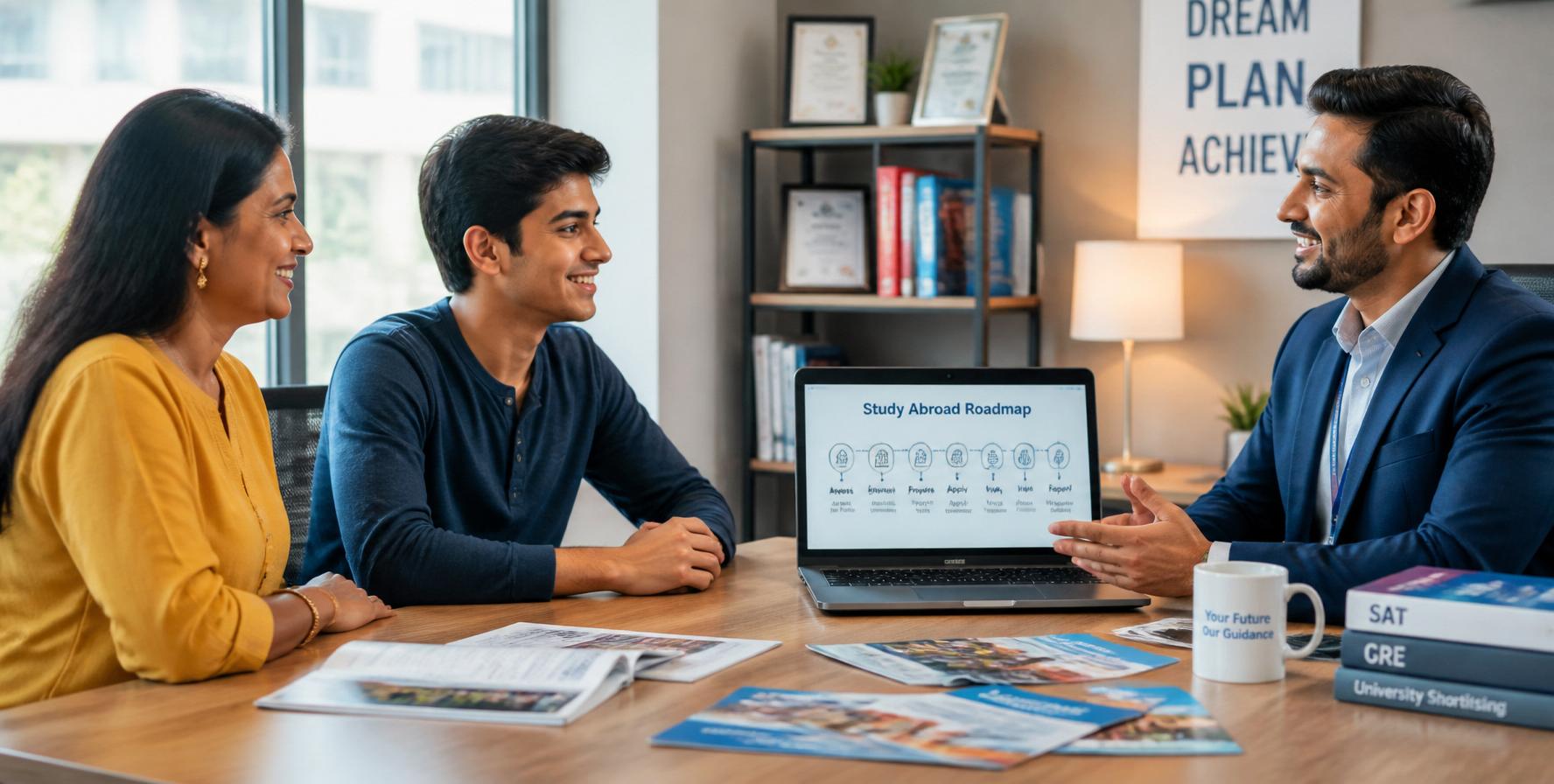
Stack Learn is an overseas education consultancy with a difference. We support students beyond the offer letter and visa application. For USA-bound students, Stack Learn helps with:
• Profile evaluation and university shortlisting
• Course and career alignment
• SEVP and Form I-20 guidance
• Financial planning with students and parents
• DS-160 and document preparation
• Visa interview preparation
• Pre-departure guidance
• CV, LinkedIn, CPT, OPT, and career-readiness planning
Studying in the USA is more than getting admission and a visa. Students need a complete plan that connects course selection, finances, visa preparation, life abroad, and future career goals.
• Profile evaluation and university shortlisting
• Course and career alignment
• SEVP and Form I-20 guidance
• Financial planning with students and parents
• DS-160 and document preparation
• Visa interview preparation
• Pre-departure guidance
• CV, LinkedIn, CPT, OPT, and career-readiness planning
Studying in the USA is more than getting admission and a visa. Students need a complete plan that connects course selection, finances, visa preparation, life abroad, and future career goals.
Frequently Asked Questions
• Do Indian students need an F-1 visa to study in the USA?
— Indian students usually need an F-1 visa for academic study at a U.S. university, college, or academic institution.
• How early can a USA student visa be issued?
— The Department of State says new student F and M visas can be issued up to 365 days before the course start date. Students cannot enter more than 30 days before the program start date.
• What is the SEVIS I-901 fee for F-1 students?
— Official ICE guidance listed the I-901 SEVIS fee for F or M visa applicants as USD 350 when checked. Students should verify the latest amount before paying.
• What is the USA student visa application fee?
— The Department of State student visa page listed the application fee as USD 185 when checked. Students should verify the latest fee and payment process through the official visa site.
• Can F-1 students work in the USA?
— F-1 students may work only under specific rules such as on-campus employment, CPT, OPT, STEM OPT, or authorized hardship/special relief employment. Unauthorized work can harm student status.
— Indian students usually need an F-1 visa for academic study at a U.S. university, college, or academic institution.
• How early can a USA student visa be issued?
— The Department of State says new student F and M visas can be issued up to 365 days before the course start date. Students cannot enter more than 30 days before the program start date.
• What is the SEVIS I-901 fee for F-1 students?
— Official ICE guidance listed the I-901 SEVIS fee for F or M visa applicants as USD 350 when checked. Students should verify the latest amount before paying.
• What is the USA student visa application fee?
— The Department of State student visa page listed the application fee as USD 185 when checked. Students should verify the latest fee and payment process through the official visa site.
• Can F-1 students work in the USA?
— F-1 students may work only under specific rules such as on-campus employment, CPT, OPT, STEM OPT, or authorized hardship/special relief employment. Unauthorized work can harm student status.
Conclusion
The USA F-1 student visa process is manageable when students prepare in the right order: choose an SEVP-certified school, secure admission, receive Form I-20, pay the SEVIS fee, complete DS-160 accurately, prepare funds and documents, and attend the interview with clarity.
Stack Learn helps Indian students and parents plan the full USA journey: admission, visa, budget, pre-departure preparation, and career readiness. If the USA is your target for 2026, start with a complete plan, not only a university list.
Stack Learn helps Indian students and parents plan the full USA journey: admission, visa, budget, pre-departure preparation, and career readiness. If the USA is your target for 2026, start with a complete plan, not only a university list.