

Planning to study in the UK in 2026? Understanding the student visa process is one of the most important steps in your study-abroad journey. The application becomes much easier when you prepare your documents, finances, and timeline in advance. A small mistake or delay can affect your plans, so staying organised is important.
This guide explains the UK Student visa process for Indian students in a simple and practical way. It covers the required documents, application timeline, costs, and key steps to help you apply with confidence. The information is based on current GOV.UK guidance checked on 30 April 2026. As immigration rules can change, always verify the latest requirements before submitting your application.
This guide explains the UK Student visa process for Indian students in a simple and practical way. It covers the required documents, application timeline, costs, and key steps to help you apply with confidence. The information is based on current GOV.UK guidance checked on 30 April 2026. As immigration rules can change, always verify the latest requirements before submitting your application.
Who Can Apply for a UK Student Visa?
Most Indian students planning to study in the UK will need a student visa. Before applying, make sure you meet the basic eligibility requirements.
You can usually apply if you:
• have an offer from a licensed UK student sponsor
• have enough money to pay your tuition fees and living costs
• meet the required English language standard
• have parental consent if you are 16 or 17 years old
If you are 16 or 17 and plan to study at an independent school, you may need a Child Student visa instead. For most students joining foundation, undergraduate, postgraduate, or eligible further education courses, this is the main visa route for studying in the UK.
You can usually apply if you:
• have an offer from a licensed UK student sponsor
• have enough money to pay your tuition fees and living costs
• meet the required English language standard
• have parental consent if you are 16 or 17 years old
If you are 16 or 17 and plan to study at an independent school, you may need a Child Student visa instead. For most students joining foundation, undergraduate, postgraduate, or eligible further education courses, this is the main visa route for studying in the UK.
Step 1: Get Your CAS from the University
Your Confirmation of Acceptance for Studies (CAS) is one of the most important documents for your visa application. The university issues it after you accept your offer and meet all admission requirements.
Your CAS normally includes:
• CAS reference number
• personal details
• course information
• course start and end dates
• first-year tuition fees
• fees already paid
• university sponsor details
Before submitting your application, check every detail carefully. Make sure your name, passport number, course details, and fee information are correct.
If you notice any mistake, ask your university to update your CAS before applying. Correct information can help avoid unnecessary delays.
Your CAS normally includes:
• CAS reference number
• personal details
• course information
• course start and end dates
• first-year tuition fees
• fees already paid
• university sponsor details
Before submitting your application, check every detail carefully. Make sure your name, passport number, course details, and fee information are correct.
If you notice any mistake, ask your university to update your CAS before applying. Correct information can help avoid unnecessary delays.
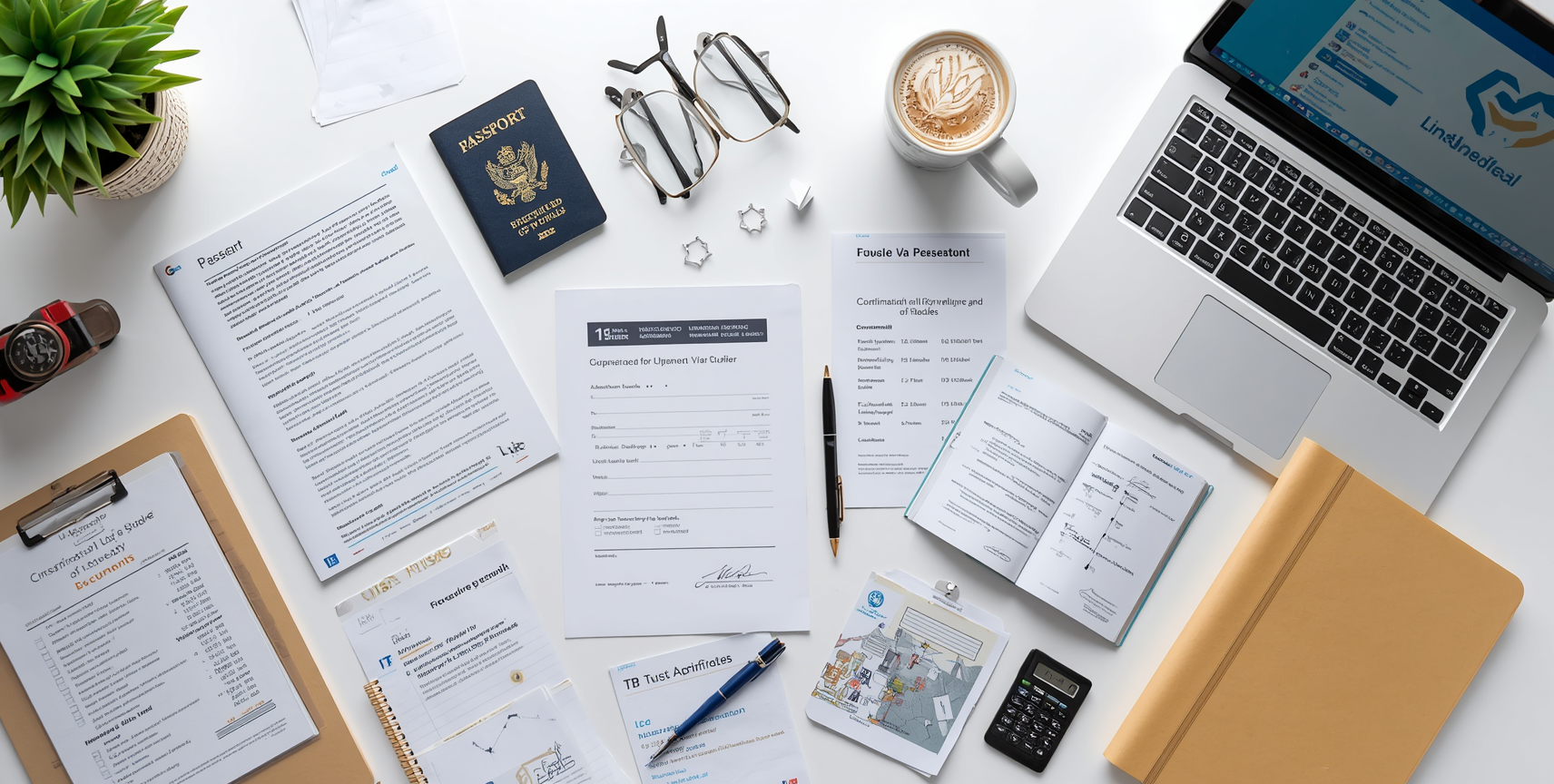
Step 2: Prepare Your Visa Documents
Before applying, make sure all your documents are ready. Good preparation can save time and reduce last-minute stress.
Most Indian students usually need:
• valid passport
• CAS from the university
• proof of funds (if required)
• proof of tuition fee payment
• academic certificates
• TB test certificate
• ATAS certificate (if applicable)
• parental consent documents (if under 18)
• sponsorship letter (if officially sponsored)
Some students may also need English language evidence or certified translations. Always follow the checklist provided with your application and your university's guidance. Submitting the right documents is more important than uploading extra ones.
Most Indian students usually need:
• valid passport
• CAS from the university
• proof of funds (if required)
• proof of tuition fee payment
• academic certificates
• TB test certificate
• ATAS certificate (if applicable)
• parental consent documents (if under 18)
• sponsorship letter (if officially sponsored)
Some students may also need English language evidence or certified translations. Always follow the checklist provided with your application and your university's guidance. Submitting the right documents is more important than uploading extra ones.
Step 3: Calculate Your Proof of Funds Correctly
Financial proof is an important part of your visa application. Before applying, calculate the required amount carefully
| Study Location | Living Costs to Show |
|---|---|
| London | GBP 1,529 per month, for up to 9 months |
| Outside London | GBP 1,171 per month, for up to 9 months |
London means the City of London and the 32 London boroughs.
You must also show enough money to pay your first-year tuition fees. The exact amount will be listed on your CAS. If you have already paid part of the fee or accommodation, make sure it is reflected on your CAS.
Example: One-Year Master's Outside London
• Remaining tuition fee: GBP 13,000
• Living costs: GBP 10,539
• Total funds to show: GBP 23,539
Example: One-Year Master's in London
• Remaining tuition fee: GBP 16,000
• Living costs: GBP 13,761
• Total funds to show: GBP 29,761
Your funds should normally be held for at least 28 consecutive days before applying. If you are using a parent's account or an education loan, keep the required supporting documents ready. Before submitting your application, check your CAS, bank statement, and university location together to avoid mistakes.
You must also show enough money to pay your first-year tuition fees. The exact amount will be listed on your CAS. If you have already paid part of the fee or accommodation, make sure it is reflected on your CAS.
Example: One-Year Master's Outside London
• Remaining tuition fee: GBP 13,000
• Living costs: GBP 10,539
• Total funds to show: GBP 23,539
Example: One-Year Master's in London
• Remaining tuition fee: GBP 16,000
• Living costs: GBP 13,761
• Total funds to show: GBP 29,761
Your funds should normally be held for at least 28 consecutive days before applying. If you are using a parent's account or an education loan, keep the required supporting documents ready. Before submitting your application, check your CAS, bank statement, and university location together to avoid mistakes.

Step 4: Take Your TB Test at an Approved Clinic
Most Indian students staying in the UK for more than six months will need a TB test. The test must be completed at a Home Office-approved clinic. Reports from unapproved hospitals or clinics may not be accepted.
Book your appointment early, especially during the peak admission season, as appointment slots can fill quickly. Keeping your TB certificate ready in advance can help avoid delays.
Book your appointment early, especially during the peak admission season, as appointment slots can fill quickly. Keeping your TB certificate ready in advance can help avoid delays.
Step 5: Check ATAS and English Language Requirements
Some science, engineering, technology, and research courses require an ATAS certificate. If your course needs ATAS approval, apply early because your visa application cannot proceed without it.
You may also need to prove your English language ability through IELTS, PTE, TOEFL, previous studies, or another accepted qualification. Always check your CAS and your university's instructions to confirm exactly what is required.
You may also need to prove your English language ability through IELTS, PTE, TOEFL, previous studies, or another accepted qualification. Always check your CAS and your university's instructions to confirm exactly what is required.
Step 6: Apply Online and Prove Your Identity
The application is completed online. After submitting it, you will be asked to prove your identity. Depending on your passport and eligibility, you may:
• use the UK Immigration: ID Check app, or
• visit a visa application centre to provide fingerprints and a photograph
Many Indian students complete this step at an official visa application centre after submitting the online form. It is best to wait for your visa decision before booking non-refundable flights or travel arrangements.
• use the UK Immigration: ID Check app, or
• visit a visa application centre to provide fingerprints and a photograph
Many Indian students complete this step at an official visa application centre after submitting the online form. It is best to wait for your visa decision before booking non-refundable flights or travel arrangements.
UK Student Visa Timeline for 2026
Planning your visa early can make your study-abroad journey much smoother. Most students should start preparing several months before their course begins.
According to GOV.UK, students applying from outside the UK can usually apply up to 6 months before their course starts. Most applications receive a decision within 3 weeks, although some cases may take longer.
A simple timeline is given below:
According to GOV.UK, students applying from outside the UK can usually apply up to 6 months before their course starts. Most applications receive a decision within 3 weeks, although some cases may take longer.
A simple timeline is given below:
| Time Before Course | What to Do |
|---|---|
| 6 months before | Accept offer, meet university conditions, prepare finances |
| 4 to 5 months before | Request CAS, check passport, review ATAS if needed |
| 3 to 4 months before | Complete TB test, arrange financial documents |
| Up to 6 months before | Submit visa application once CAS and evidence are ready |
| After applying | Prove identity by app or visa application centre |
| After decision | Set up UKVI account and access your eVisa if instructed |
| Travel window | Arrive up to 1 month before course start if your course is longer than 6 months, or up to 1 week before if it is 6 months or less |
One important point to remember is that you should only travel on or after the start date mentioned on your visa. Travelling earlier may cause problems when entering the UK.
UK Student Visa Fees and IHS in 2026
Before applying, it is important to understand the main costs involved in your visa application.
The current Student visa application fee is GBP 558 for applications made from outside the UK. Students also need to pay the Immigration Health Surcharge (IHS), which is currently GBP 776 per year. The final IHS amount depends on your course and visa duration and is calculated automatically during the application.
Apart from these charges, you should also budget for:
• Student visa application fee
• Immigration Health Surcharge (IHS)
• TB test
• English language test (if required)
• document translation (if needed)
• optional visa application centre services
• travel expenses for your appointment
Always check the latest fees before applying, as immigration charges can change over time.
The current Student visa application fee is GBP 558 for applications made from outside the UK. Students also need to pay the Immigration Health Surcharge (IHS), which is currently GBP 776 per year. The final IHS amount depends on your course and visa duration and is calculated automatically during the application.
Apart from these charges, you should also budget for:
• Student visa application fee
• Immigration Health Surcharge (IHS)
• TB test
• English language test (if required)
• document translation (if needed)
• optional visa application centre services
• travel expenses for your appointment
Always check the latest fees before applying, as immigration charges can change over time.
Can Indian Students Bring Dependants?
The rules for bringing dependants to the UK are now stricter than before. You may be able to bring your partner or children if you are:
• a government-sponsored student on a course longer than 6 months, or
• a full-time postgraduate student on an eligible course
For many postgraduate courses starting on or after 1 January 2024, the course usually needs to be a PhD, doctorate, or research-based higher degree.
Dependants must also meet financial requirements
• a government-sponsored student on a course longer than 6 months, or
• a full-time postgraduate student on an eligible course
For many postgraduate courses starting on or after 1 January 2024, the course usually needs to be a PhD, doctorate, or research-based higher degree.
Dependants must also meet financial requirements
| Study Location | Funds Per Dependant |
|---|---|
| London | GBP 845 per month, for up to 9 months |
| Outside London | GBP 680 per month, for up to 9 months |
These funds are separate from the money the main student is required to show, so families should plan their budget carefully before applying.
Common UK Student Visa Mistakes to Avoid
Even a small mistake can delay your visa or create unnecessary stress. Here are some common mistakes that students should avoid.
Using Old Financial Figures
Many websites still show outdated maintenance amounts. Always check the latest GOV.UK guidance before calculating your required funds.
Applying Too Early
Your bank balance usually needs to meet the required holding period before you apply. Submitting your application too soon can lead to problems with your financial evidence.
Not Checking Your CAS Properly
Before applying, carefully review your CAS. Make sure your personal details, course information, and tuition fee payments are correct.
Taking the TB Test at the Wrong Clinic
Your TB test must be completed at a Home Office-approved clinic. Tests from unapproved centres may not be accepted.
Assuming Dependants Can Always Join You
The rules for bringing dependants have changed in recent years. Check the latest eligibility requirements before making family travel plans.
Booking Flights Before Visa Approval
It is safer to wait for your visa decision before booking non-refundable flights. This can help you avoid unnecessary expenses if your application takes longer than expected.
Using Old Financial Figures
Many websites still show outdated maintenance amounts. Always check the latest GOV.UK guidance before calculating your required funds.
Applying Too Early
Your bank balance usually needs to meet the required holding period before you apply. Submitting your application too soon can lead to problems with your financial evidence.
Not Checking Your CAS Properly
Before applying, carefully review your CAS. Make sure your personal details, course information, and tuition fee payments are correct.
Taking the TB Test at the Wrong Clinic
Your TB test must be completed at a Home Office-approved clinic. Tests from unapproved centres may not be accepted.
Assuming Dependants Can Always Join You
The rules for bringing dependants have changed in recent years. Check the latest eligibility requirements before making family travel plans.
Booking Flights Before Visa Approval
It is safer to wait for your visa decision before booking non-refundable flights. This can help you avoid unnecessary expenses if your application takes longer than expected.
Plan Your UK Student Visa Documents With Us

Applying for a UK Student visa involves several important steps, and missing even one document can delay your application. Our team helps students review their visa preparation by checking:
• CAS details
• financial documents
• 28-day funds requirement
• TB test timing
• ATAS requirements (if applicable)
• document translations
• dependant eligibility
• application timeline
Preparing your documents early gives you enough time to correct any mistakes and makes the entire process less stressful for both students and parents.
• CAS details
• financial documents
• 28-day funds requirement
• TB test timing
• ATAS requirements (if applicable)
• document translations
• dependant eligibility
• application timeline
Preparing your documents early gives you enough time to correct any mistakes and makes the entire process less stressful for both students and parents.
Frequently Asked Questions
How early can Indian students apply for a UK Student visa?
— Students applying from outside the UK can usually apply up to 6 months before their course starts. You must receive your CAS before submitting your application.
How long does a UK Student visa decision take?
— Most applications from outside the UK receive a decision within 3 weeks, although some applications may take longer.
How much money do I need for a UK Student visa in 2026?
— You need enough money to cover your first-year tuition fees and living expenses. The required maintenance amount depends on whether you study in London or outside London.
What is the UK Student visa fee in 2026?
— The current application fee is GBP 558. Students also need to pay the Immigration Health Surcharge (IHS).
What is the IHS for a UK Student visa?
— The current student IHS rate is GBP 776 per year. The final amount is calculated automatically during your online application.
Do Indian students need a TB test?
— Yes, most Indian students coming to the UK for more than six months need a TB test from a Home Office-approved clinic.
Can students work on a UK Student visa?
— Many students can work while studying, but the number of permitted hours depends on their visa conditions and course. Always follow the rules mentioned on your visa.
— Students applying from outside the UK can usually apply up to 6 months before their course starts. You must receive your CAS before submitting your application.
How long does a UK Student visa decision take?
— Most applications from outside the UK receive a decision within 3 weeks, although some applications may take longer.
How much money do I need for a UK Student visa in 2026?
— You need enough money to cover your first-year tuition fees and living expenses. The required maintenance amount depends on whether you study in London or outside London.
What is the UK Student visa fee in 2026?
— The current application fee is GBP 558. Students also need to pay the Immigration Health Surcharge (IHS).
What is the IHS for a UK Student visa?
— The current student IHS rate is GBP 776 per year. The final amount is calculated automatically during your online application.
Do Indian students need a TB test?
— Yes, most Indian students coming to the UK for more than six months need a TB test from a Home Office-approved clinic.
Can students work on a UK Student visa?
— Many students can work while studying, but the number of permitted hours depends on their visa conditions and course. Always follow the rules mentioned on your visa.
Conclusion
The UK Student visa process becomes much easier when you prepare each step in the right order. Start by getting your CAS, organise your financial documents, complete your TB test, check any ATAS requirements, and submit your application only when everything is ready.
A simple way to stay organised is to create four folders for your documents:
• CAS and university documents
• financial documents
• medical documents
• identity and visa documents
Review each folder carefully before applying to reduce the chances of delays or missing information. If you are preparing your UK Student visa application, our team can help you review your documents, timeline, and visa requirements so you can apply with greater confidence.
A simple way to stay organised is to create four folders for your documents:
• CAS and university documents
• financial documents
• medical documents
• identity and visa documents
Review each folder carefully before applying to reduce the chances of delays or missing information. If you are preparing your UK Student visa application, our team can help you review your documents, timeline, and visa requirements so you can apply with greater confidence.