
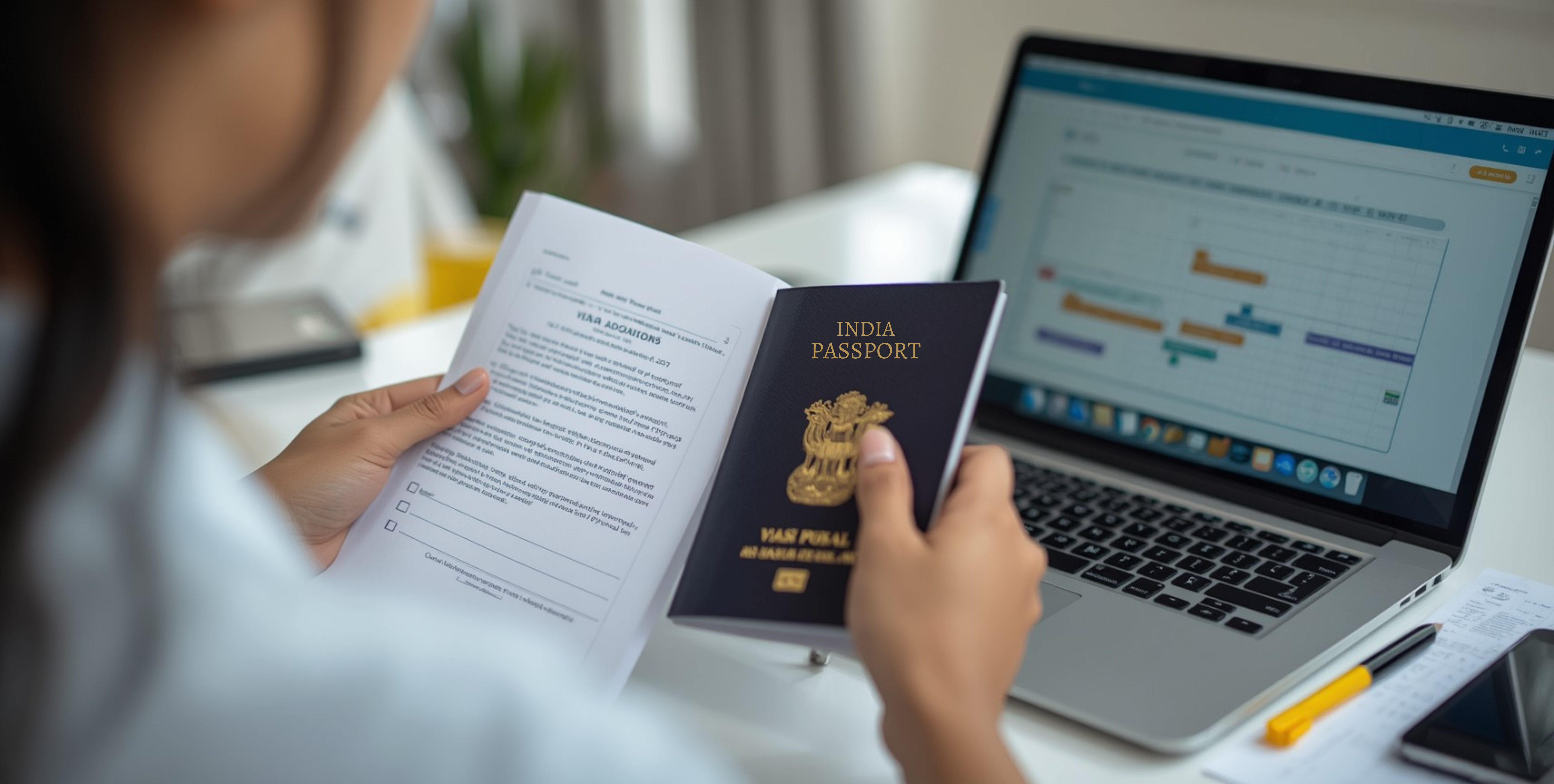
Ireland is becoming a popular study destination for Indian students because of its English-speaking environment, respected universities, growing job market, and post-study work options for eligible graduates. But getting an Ireland student visa is not just about uploading a few documents.
Students need to show that their course choice is genuine, their financial planning is clear, and their overall study plan makes sense. A well-prepared visa file can make the process smoother and reduce unnecessary stress for both students and parents.
This guide explains the Ireland student visa process for Indian students in 2026 in a simple and practical order, including the main documents, visa steps, costs, and important things to check before applying.
Students need to show that their course choice is genuine, their financial planning is clear, and their overall study plan makes sense. A well-prepared visa file can make the process smoother and reduce unnecessary stress for both students and parents.
This guide explains the Ireland student visa process for Indian students in 2026 in a simple and practical order, including the main documents, visa steps, costs, and important things to check before applying.
Ireland Student Visa: What Students Should Understand First
If you are planning to study in Ireland for more than three months, you will usually need to apply for a long-stay study visa before travelling. The application is normally started online through AVATS , followed by document submission based on the instructions given in the visa process. An Ireland student visa decision is usually based on whether:
• your course and institution are suitable
• you have a valid offer from an Irish education provider
• you can show enough funds without depending on part-time work
• you have arranged private medical insurance
• your academic background supports the course
• your documents and statement are clear and consistent
• you have declared any previous visa refusals honestly, if applicable
Students staying in Ireland for more than 90 days should also remember that visa approval is not the final step. After arrival, eligible non-EEA students normally need to register their immigration permission and receive an Irish Residence Permit (IRP).
• your course and institution are suitable
• you have a valid offer from an Irish education provider
• you can show enough funds without depending on part-time work
• you have arranged private medical insurance
• your academic background supports the course
• your documents and statement are clear and consistent
• you have declared any previous visa refusals honestly, if applicable
Students staying in Ireland for more than 90 days should also remember that visa approval is not the final step. After arrival, eligible non-EEA students normally need to register their immigration permission and receive an Irish Residence Permit (IRP).
Step 1: Check the Course and Provider Before Paying Fees
Before paying deposits or accepting an offer, students should first check whether the course and institution are suitable for visa purposes. One of the most important checks is whether the course appears on the Interim List of Eligible Programmes (ILEP) where required for immigration purposes. Before accepting an offer, check:
• whether the course appears on the ILEP, where required
• whether the qualification level matches your academic background
• whether the course is full time
• whether it leads to a recognised qualification
• whether the institution has a good student-support system
• whether the city and living costs fit your budget
• whether the course supports your long-term career plan
Students should not choose a course only because it looks easy to enter. A good Ireland study plan should make sense academically, financially, and from a visa point of view.
• whether the course appears on the ILEP, where required
• whether the qualification level matches your academic background
• whether the course is full time
• whether it leads to a recognised qualification
• whether the institution has a good student-support system
• whether the city and living costs fit your budget
• whether the course supports your long-term career plan
Students should not choose a course only because it looks easy to enter. A good Ireland study plan should make sense academically, financially, and from a visa point of view.
Step 2: Apply Online Through AVATS
For an Ireland long-stay study visa, students usually apply online through AVATS . Irish immigration guidance says students should apply up to three months before their intended travel date. In most cases, the application must be made from your home country or from a country where you are legally resident.
Basic Ireland student visa application flow
Basic Ireland student visa application flow
| Step | What It Means |
|---|---|
| Create AVATS application | Fill in the online visa form carefully |
| Print the summary form | Sign and date it before submitting documents |
| Pay the visa fee | Payment method depends on the application route |
| Submit supporting documents | Follow the instructions shown after the AVATS form |
| Wait for a decision | Immigration may ask for additional documents if needed |
| Travel after approval | Carry important visa and admission documents with you |
| Register after arrival | Students staying more than 90 days normally register immigration permission |
One important point: if your application is being processed through the Dublin Visa Office, supporting documents usually need to be submitted within 30 days of creating the AVATS application . Before submitting, students should check every detail carefully, especially passport number, course details, travel dates, and contact information. Small mistakes can create delays.
Step 3: Prepare the Core Student Visa Documents

The exact document list can vary from one student to another, but most Ireland student visa applications usually include the following core documents:
• signed AVATS summary application form
• valid passport
• passport-size photographs
• visa fee payment evidence, where applicable
• application letter explaining your study plan
• letter of acceptance from the Irish institution
• evidence of tuition fee payment or fee arrangement
• academic transcripts and certificates
• English language test evidence, where required
• proof of finances
• sponsor documents, if parents or family are funding the study
• private medical insurance
• details of previous visa refusals, if any
• gap explanation, work experience, or current activity details where relevant
A strong visa file should be clear, complete, and consistent. If there is a large bank deposit, an education gap, a course change, or a long break after studies, explain it properly instead of leaving the visa officer to guess.
• signed AVATS summary application form
• valid passport
• passport-size photographs
• visa fee payment evidence, where applicable
• application letter explaining your study plan
• letter of acceptance from the Irish institution
• evidence of tuition fee payment or fee arrangement
• academic transcripts and certificates
• English language test evidence, where required
• proof of finances
• sponsor documents, if parents or family are funding the study
• private medical insurance
• details of previous visa refusals, if any
• gap explanation, work experience, or current activity details where relevant
A strong visa file should be clear, complete, and consistent. If there is a large bank deposit, an education gap, a course change, or a long break after studies, explain it properly instead of leaving the visa officer to guess.
Step 4: Understand Proof of Funds
Proof of funds is one of the most important parts of the Ireland student visa process. For academic courses beginning after 1 July 2023 , Irish immigration guidance says visa-required students must show immediate access to at least EUR 10,000 for living costs for one academic year. Students must also show access to enough money for future years of study, along with tuition fee planning.
For courses shorter than eight months , students generally need to show EUR 833 per month of stay or EUR 6,665 in total , whichever is lower.
Financial documents may include:
• student bank statements
• sponsor bank statements
• sponsor income proof
• education loan sanction documents
• scholarship letters
• tuition fee payment proof
• approved education bond evidence, where accepted
Finance documents should be recent, easy to read, and able to explain where the money came from. If there is any unusual deposit or sudden balance increase, it should be supported with a clear explanation and evidence. One important point: credit cards are not accepted as proof of funds under the official student visa finance guidance.
For courses shorter than eight months , students generally need to show EUR 833 per month of stay or EUR 6,665 in total , whichever is lower.
Financial documents may include:
• student bank statements
• sponsor bank statements
• sponsor income proof
• education loan sanction documents
• scholarship letters
• tuition fee payment proof
• approved education bond evidence, where accepted
Finance documents should be recent, easy to read, and able to explain where the money came from. If there is any unusual deposit or sudden balance increase, it should be supported with a clear explanation and evidence. One important point: credit cards are not accepted as proof of funds under the official student visa finance guidance.
Step 5: Know the Visa and Registration Costs
Students should budget for visa and immigration costs before applying.
Indicative visa fees
Indicative visa fees

| Item | Indicative Official Fee |
|---|---|
| Single-entry visa | EUR 60 |
| Multi-entry visa | EUR 100 |
| Transit visa | EUR 25 |
Apart from the visa fee, students may also need to budget for:
• document submission or courier charges
• translation or notarisation costs, if required
• private medical insurance
• travel and baggage costs
• local service charges, where applicable
Students staying in Ireland for more than 90 days usually need to register their immigration permission after arrival. The IRP registration fee is commonly EUR 300 , where applicable, but students should always confirm the latest amount and process before attending the appointment.
• document submission or courier charges
• translation or notarisation costs, if required
• private medical insurance
• travel and baggage costs
• local service charges, where applicable
Students staying in Ireland for more than 90 days usually need to register their immigration permission after arrival. The IRP registration fee is commonly EUR 300 , where applicable, but students should always confirm the latest amount and process before attending the appointment.
Step 6: Arrange Private Medical Insurance
Private medical insurance is an important part of Ireland student visa planning. It should not be left until the last minute. Before choosing a policy, students should check:
• whether the university offers an insurance option
• whether the insurance is acceptable for visa and immigration registration
• how long the policy is valid
• whether emergency care and hospital cover are included
• whether there are limits for pre-existing conditions, if relevant
For international students, health insurance should be treated as a required study cost , not an optional extra.
• whether the university offers an insurance option
• whether the insurance is acceptable for visa and immigration registration
• how long the policy is valid
• whether emergency care and hospital cover are included
• whether there are limits for pre-existing conditions, if relevant
For international students, health insurance should be treated as a required study cost , not an optional extra.
Step 7: Register After Arrival in Ireland
Students coming from outside the EU, EEA, UK, or Switzerland and staying in Ireland for more than 90 days normally need to register their permission after arrival. Registration is usually expected within 90 days of arrival. Students may need documents such as:
• passport
• proof of Irish address
• college or university documents
• private medical insurance evidence
• proof of finances, where required
• registration fee payment by card, where applicable
The immigration permission stamp is important. For many eligible full-time international students, Stamp 2 is the common student permission and is linked to student work rights and study conditions.
Can International Students Work on an Ireland Student Visa?
Students with valid Stamp 2 permission may usually work up to 20 hours per week during study periods. During certain holiday periods, they may be allowed to work up to 40 hours per week, subject to current immigration rules. However, students should not plan their Ireland budget around part-time work. Irish immigration expects students to show enough funds for study and living costs without depending on casual work income .
Common Ireland Student Visa Mistakes
Students should try to avoid these common mistakes:
• choosing a course without checking ILEP or immigration suitability
• showing funds that are unclear or recently moved without explanation
• submitting weak or incomplete sponsor documents
• not declaring previous visa refusals
• writing a very generic application letter
• ignoring private medical insurance
• applying too close to the travel date
• assuming part-time work will cover tuition or major living costs
• forgetting immigration registration after arrival
A strong visa application should tell one clear story:
why this course, why Ireland, why now, how the studies will be funded, and how the course fits the student’s future plan.
• choosing a course without checking ILEP or immigration suitability
• showing funds that are unclear or recently moved without explanation
• submitting weak or incomplete sponsor documents
• not declaring previous visa refusals
• writing a very generic application letter
• ignoring private medical insurance
• applying too close to the travel date
• assuming part-time work will cover tuition or major living costs
• forgetting immigration registration after arrival
A strong visa application should tell one clear story:
why this course, why Ireland, why now, how the studies will be funded, and how the course fits the student’s future plan.
How Stack Learn Helps Students Prepare Better

Stack Learn is an overseas education consultancy with a difference. We support students not only with admission and visa filing, but also with planning the full study journey more carefully. For Ireland, Stack Learn helps students with:
• course and country shortlisting
• ILEP and study-pathway awareness
• university application planning
• visa document readiness
• financial planning with parents
• application letter and SOP guidance
• pre-departure preparation
• CV, LinkedIn, interview, and job-readiness support
Ireland can be a strong study destination, but students should arrive prepared. The goal is not only to get an offer letter or visa approval. The real goal is to build a clear path from admission to career readiness.
• course and country shortlisting
• ILEP and study-pathway awareness
• university application planning
• visa document readiness
• financial planning with parents
• application letter and SOP guidance
• pre-departure preparation
• CV, LinkedIn, interview, and job-readiness support
Ireland can be a strong study destination, but students should arrive prepared. The goal is not only to get an offer letter or visa approval. The real goal is to build a clear path from admission to career readiness.
Frequently Asked Questions
Do Indian students need a visa to study in Ireland?
— Yes. Indian students usually need a long-stay study visa if they plan to study in Ireland for more than three months.
When should I apply for an Ireland student visa?
— Official guidance says students should apply up to three months before the intended travel date. It is better to prepare earlier because documents, funds, and university fee steps can take time.
How much proof of funds is required for Ireland student visa?
— For academic courses beginning after 1 July 2023, official guidance says visa-required students must show immediate access to at least EUR 10,000 for living costs for one academic year, plus access for later years and course fees. Students should verify the latest amount before applying.
Can students work while studying in Ireland?
— Students with valid Stamp 2 permission may generally work up to 20 hours per week during term and up to 40 hours per week during specified holiday periods, subject to current rules.
Is health insurance required for Ireland student visa?
— Private medical insurance is part of Ireland study visa and registration planning. Students should arrange accepted insurance before travel.
— Yes. Indian students usually need a long-stay study visa if they plan to study in Ireland for more than three months.
When should I apply for an Ireland student visa?
— Official guidance says students should apply up to three months before the intended travel date. It is better to prepare earlier because documents, funds, and university fee steps can take time.
How much proof of funds is required for Ireland student visa?
— For academic courses beginning after 1 July 2023, official guidance says visa-required students must show immediate access to at least EUR 10,000 for living costs for one academic year, plus access for later years and course fees. Students should verify the latest amount before applying.
Can students work while studying in Ireland?
— Students with valid Stamp 2 permission may generally work up to 20 hours per week during term and up to 40 hours per week during specified holiday periods, subject to current rules.
Is health insurance required for Ireland student visa?
— Private medical insurance is part of Ireland study visa and registration planning. Students should arrange accepted insurance before travel.
Conclusion
The Ireland student visa process is manageable when students prepare in the right order: choose an approved course, build a logical study plan, arrange clear funds, prepare honest documents, secure medical insurance, apply through AVATS, and register after arrival.
Stack Learn helps students and parents plan this journey with clarity. If you are considering Ireland for 2026, speak with Stack Learn for course shortlisting, visa planning, budget preparation, pre-departure support, and career-readiness guidance.
Stack Learn helps students and parents plan this journey with clarity. If you are considering Ireland for 2026, speak with Stack Learn for course shortlisting, visa planning, budget preparation, pre-departure support, and career-readiness guidance.