

Germany and Ireland are both attractive European study destinations, but they suit different students. Germany is known for low or no tuition at many public universities, strong engineering and technical education, and a large economy. Ireland is known for English-taught education, technology and pharmaceutical links, and a compact English-speaking job market.
The right choice depends on your course, budget, language readiness, career plan, and ability to adapt.
The right choice depends on your course, budget, language readiness, career plan, and ability to adapt.
Quick Verdict: Germany or Ireland?
| Student Priority | Germany May Suit Better If... | Ireland May Suit Better If... |
|---|---|---|
| Tuition | You want low-tuition public university options | You can manage higher tuition for English-speaking study |
| Language | You are ready to learn German for life and jobs | You prefer an English-speaking country |
| Career fields | You target engineering, IT, manufacturing, research, healthcare, or applied sciences | You target IT, pharma, business, finance, data, or English-speaking roles |
| Visa funds | You can prepare blocked account / finance proof | You can show Ireland study funds and tuition planning |
| Job market | You can build German language and local application skills | You can compete in a smaller, English-speaking market |
| Lifestyle | You want a larger European economy and many university cities | You want a smaller country with strong global-company presence |
Neither is a shortcut. Both require preparation.
Cost and Tuition Comparison
Germany is often seen as cheaper because many public universities do not charge tuition for most bachelor's and many master's programmes. However, students still need living costs, semester contribution, health insurance, travel, and settlement funds. DAAD says students may need around EUR 900 to EUR 1,200 per month depending on city.
DAAD also states that, as of 1 January 2025, non-EU/EEA students must prove EUR 992 per month for financial resources, commonly referenced through a blocked account. For 2026 planning, the Germany country cluster used EUR 11,904 per year.
Ireland usually has higher tuition. Education in Ireland lists indicative non-EU tuition ranges for undergraduate and postgraduate programmes, varying by subject and institution. Education in Ireland also estimates living costs around EUR 10,000 to EUR 16,000 per year depending on location and lifestyle.
| Cost Area | Germany | Ireland |
|---|---|---|
| Tuition | Many public universities have low/no tuition, but semester contributions apply | International tuition is usually higher and varies by course |
| Living costs | DAAD suggests around EUR 900 to EUR 1,200 per month | Education in Ireland suggests around EUR 10,000 to EUR 16,000 per year |
| Proof of funds | Commonly EUR 11,904/year for 2026 planning | EUR 10,000 for one academic year for many visa-required students |
| Hidden cost | German language learning, blocked account, health insurance, APS for many Indian students | Accommodation pressure, health insurance, Dublin cost |
Germany may be cheaper on tuition. Ireland may be simpler linguistically for many Indian students.

Visa and Documentation
Germany visa planning for Indian students can include:
- admission from a recognized institution
- APS verification for many Indian applicants
- proof of funds
- health insurance
- academic documents
- language evidence where required
- visa appointment and local mission rules
Ireland visa planning can include:
- long-stay study visa for students studying more than 3 months
- AVATS application
- offer from an approved provider
- ILEP check where relevant
- proof of funds
- health insurance
- tuition evidence
- registration/IRP after arrival
Both countries expect a genuine academic plan and clear funds.
Work While Studying
| Work Rule | Germany | Ireland |
|---|---|---|
| During study | Third-country students can generally work up to 140 full days or 280 half-days per year, or 20 hours per week during lecture periods | Eligible Stamp 2 students may work up to 20 hours per week during term |
| During holidays | Work rules depend on day/half-day limits and student-job categories | Up to 40 hours per week during June, July, August, September and 15 Dec to 15 Jan |
| Language impact | German language helps strongly for part-time and professional roles | English helps, but competition is high |
Do not choose Ireland only because it is English-speaking or Germany only because tuition is low. Work readiness matters in both.
Post-Study Work Comparison
Germany allows eligible third-country graduates to apply for a residence permit for up to 18 months to seek qualified employment after successful graduation. During that period, graduates can work while looking for suitable employment.
Ireland's Third Level Graduate Programme allows eligible graduates to stay after study under Stamp 1G. Eligible Level 8 graduates may receive up to 12 months. Eligible Level 9 or above graduates may receive 12 months initially with a possible further 12 months, subject to conditions.
Ireland's Third Level Graduate Programme allows eligible graduates to stay after study under Stamp 1G. Eligible Level 8 graduates may receive up to 12 months. Eligible Level 9 or above graduates may receive 12 months initially with a possible further 12 months, subject to conditions.
| Area | Germany | Ireland |
|---|---|---|
| Post-study route | Up to 18 months job-seeking residence permit | Stamp 1G under Third Level Graduate Programme |
| Duration | Up to 18 months | Level 8 up to 12 months; Level 9+ may reach 24 months |
| After that | Qualified employment residence permit or EU Blue Card where eligible | Employment permit route such as Critical Skills or General Employment Permit |
| Main challenge | German language, regulated roles, application process | Smaller job market, permit eligibility, competition |
Career Pathways

Germany may be strong for:
- mechanical engineering
- automotive and manufacturing
- electrical engineering
- computer science
- data and AI
- renewable energy
- healthcare and medical technology
- research and PhD pathways
Ireland may be strong for:
- IT and software
- data analytics
- pharmaceuticals and biotech
- finance and accounting
- business analytics
- supply chain
- engineering
- healthcare-related pathways, subject to registration
Students should check not only course names but also job language, licensing, internships, and employer demand.
Language Reality
Germany has many English-taught programmes, especially at master's level. But daily life, internships, part-time work, and long-term jobs often become easier with German language skills.
Ireland is English-speaking, which can reduce the language barrier for Indian students. But English alone does not guarantee employment. Employers still expect skills, experience, communication, and professional readiness.
Ireland is English-speaking, which can reduce the language barrier for Indian students. But English alone does not guarantee employment. Employers still expect skills, experience, communication, and professional readiness.
Which Is Better for Parents?
Parents may prefer Germany if:
- tuition cost is a major concern
- the student is strong academically
- the student is willing to learn German
- the course has strong technical value
- the family can handle documentation and APS planning
Parents may prefer Ireland if:
- English-speaking environment is a priority
- the course fits tech/pharma/business goals
- the family can manage tuition and accommodation costs
- the student wants a compact country and faster cultural adjustment
How Stack Learn Helps Students Decide
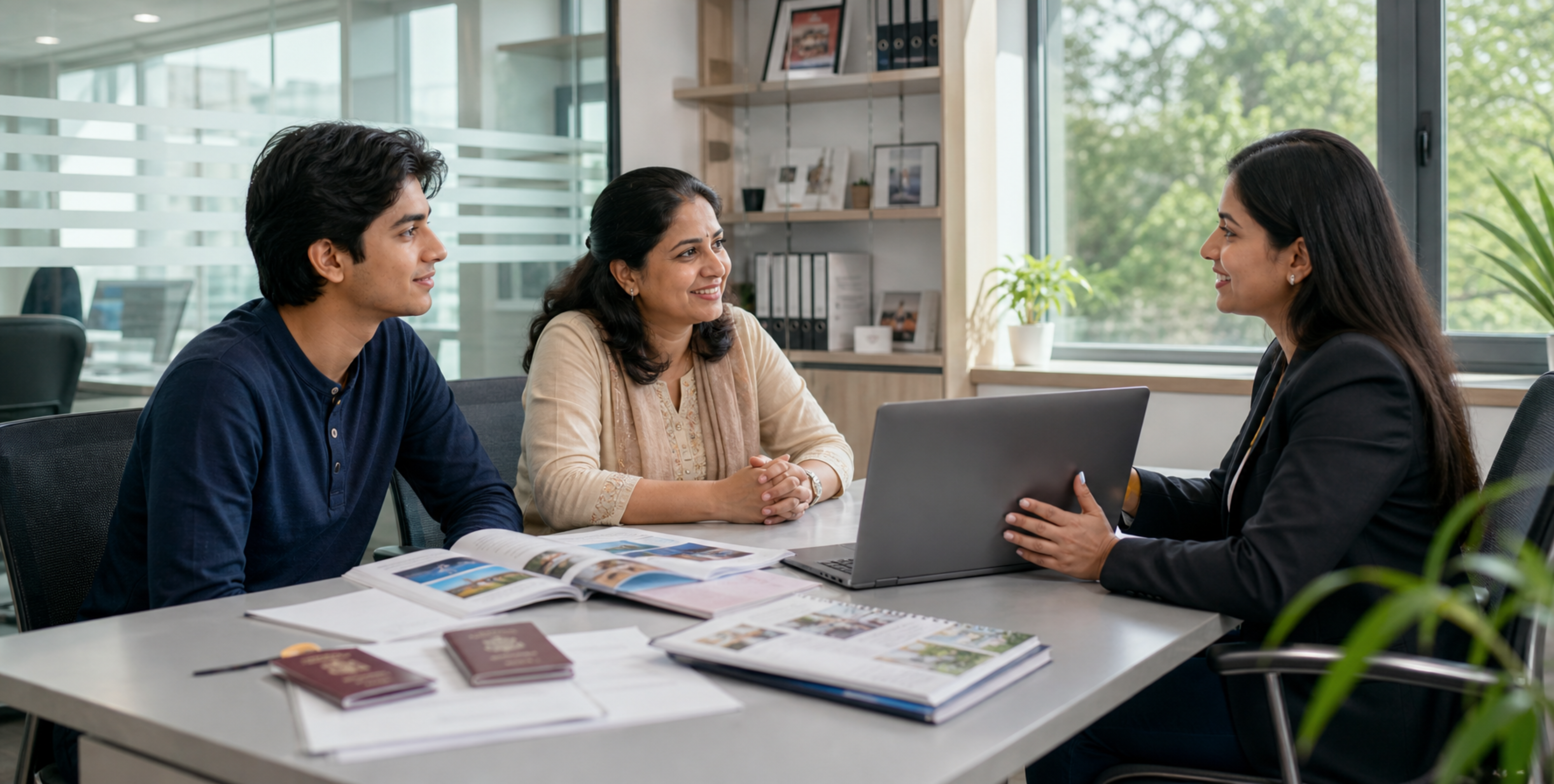
Stack Learn is an overseas education consultancy with a difference. We help students compare Germany and Ireland realistically.
We support:
- course and university shortlisting
- visa and document readiness
- APS awareness for Germany
- Ireland ILEP and funds awareness
- budget planning
- language planning
- CV, LinkedIn, interview, and job-readiness support
- pre-departure training
Europe can be powerful for students, but only when the country choice matches the student's profile.
Frequently Asked Questions
• Is Germany cheaper than Ireland for international students?
— Germany is often cheaper for tuition at public universities, but students still need living costs, semester contribution, insurance, and proof of funds. Ireland usually has higher tuition and accommodation costs.
• Is Ireland better because it is English-speaking?
— Ireland may be easier linguistically for many Indian students, but jobs are not guaranteed. Skills, experience, networking, and permit eligibility still matter.
• Which country is better for engineering?
— Germany is especially strong for engineering, manufacturing, automotive, and applied technical fields. Ireland can also be good for engineering, but the market is smaller.
• Which country is better for IT jobs?
— Both can be strong. Germany has a larger economy, while Ireland has a strong tech-company presence. Language and employer needs matter.
• How should I choose between Germany and Ireland?
— Compare tuition, living costs, language readiness, course quality, post-study work, job market, and your willingness to adapt.
Conclusion
Germany may be better for students who want low tuition, technical depth, and are willing to learn German. Ireland may be better for students who want English-speaking education, tech/pharma/business links, and a compact study environment.
Stack Learn helps students choose between Germany and Ireland through admission, visa, budget, language, pre-departure, and career-readiness planning.
Stack Learn helps students choose between Germany and Ireland through admission, visa, budget, language, pre-departure, and career-readiness planning.