

Ireland is a popular choice for Indian students because of its English-speaking environment, respected universities, and strong opportunities in fields like technology, business, healthcare, and life sciences. It also attracts students who are looking for post-study work options and long-term career growth.
At the same time, studying in Ireland requires careful financial planning. Tuition fees, accommodation, living expenses, visa costs, health insurance, and travel all add to the overall budget, especially in cities like Dublin where living costs can be higher. This guide explains the cost of studying in Ireland for Indian students in 2026 in a simple and practical way, so students and parents can plan with more clarity before making a final decision.
At the same time, studying in Ireland requires careful financial planning. Tuition fees, accommodation, living expenses, visa costs, health insurance, and travel all add to the overall budget, especially in cities like Dublin where living costs can be higher. This guide explains the cost of studying in Ireland for Indian students in 2026 in a simple and practical way, so students and parents can plan with more clarity before making a final decision.
Main Cost Categories for Studying in Ireland
When planning your Ireland budget, it is important to look beyond tuition fees. The total cost of studying in Ireland for Indian students includes several other expenses before and after arrival.
| Cost Category | Why It Matters |
|---|---|
| Tuition fees | Usually the biggest academic expense |
| Living expenses | Rent, food, transport, utilities, phone, and personal spending |
| Visa application | Entry visa fee and related service charges |
| Immigration registration | IRP registration fee after arrival, where applicable |
| Health insurance | Important for visa and student planning |
| Travel | Flights, baggage, and airport transfer |
| Initial settlement | Deposit, first rent, bedding, kitchen items, local SIM |
| Study-related costs | Laptop, books, software, printing, and project materials |
| Career preparation | CV support, LinkedIn, interview preparation, certifications |
One common mistake families make is budgeting only for tuition and ignoring the first-month setup cost. In Ireland, the initial stage can be expensive because rent, accommodation deposit, travel, insurance, and basic settlement expenses often need to be managed at the same time.
Tuition Fees in Ireland for International Students

Tuition fees in Ireland vary depending on the university, course level, and subject area. For Indian students, the exact cost can differ a lot between business, engineering, healthcare, and specialised postgraduate programmes, so it is always important to check the latest fee on the university's official website before applying. Below are indicative tuition fee ranges for non-EU international students.
Indicative Undergraduate Tuition Fees
Indicative Undergraduate Tuition Fees
| Subject Area | Indicative Annual Tuition Range |
|---|---|
| Business | EUR 10,300 to EUR 29,000 |
| Engineering | EUR 14,500 to EUR 28,500 |
| Science and Technology | EUR 14,500 to EUR 28,500 |
| Arts and Humanities | EUR 13,500 to EUR 28,200 |
| Medicine and Health Sciences | EUR 50,135 to EUR 62,500 |
Indicative Postgraduate Tuition Fees
| Subject Area | Indicative Annual Tuition Range |
|---|---|
| Business | EUR 14,000 to EUR 40,000 |
| Engineering | EUR 15,000 to EUR 30,000 |
| Science and Technology | EUR 15,000 to EUR 31,000 |
| Arts and Humanities | EUR 12,000 to EUR 23,000 |
| Medicine and Health Sciences | EUR 11,000 to EUR 30,000 |
These figures are only indicative and should be used as a planning guide, not as a final fee confirmation. Some specialised courses can cost more, while scholarships or tuition discounts may reduce the total amount for eligible students.
Living Costs in Ireland
Living expenses are a major part of the total cost of studying in Ireland. Along with tuition fees, students should plan separately for accommodation, food, transport, and day-to-day personal spending. In general, international students may spend around EUR 10,000 to EUR 16,000 per year on living costs, depending on the city, accommodation type, and lifestyle. Typical living expenses include:
• rent
• utilities
• food and groceries
• local transport
• mobile phone and internet
• personal spending
• clothing and winter essentials
• academic materials
• laundry
• social and emergency costs
Dublin is usually the most expensive city for students, especially for accommodation. Other cities such as Cork, Galway, Limerick, Maynooth, and Waterford may be slightly more affordable, but rent and room availability can still vary a lot depending on the area and intake season.
• rent
• utilities
• food and groceries
• local transport
• mobile phone and internet
• personal spending
• clothing and winter essentials
• academic materials
• laundry
• social and emergency costs
Dublin is usually the most expensive city for students, especially for accommodation. Other cities such as Cork, Galway, Limerick, Maynooth, and Waterford may be slightly more affordable, but rent and room availability can still vary a lot depending on the area and intake season.
Accommodation Costs: A Major Part of the Ireland Budget
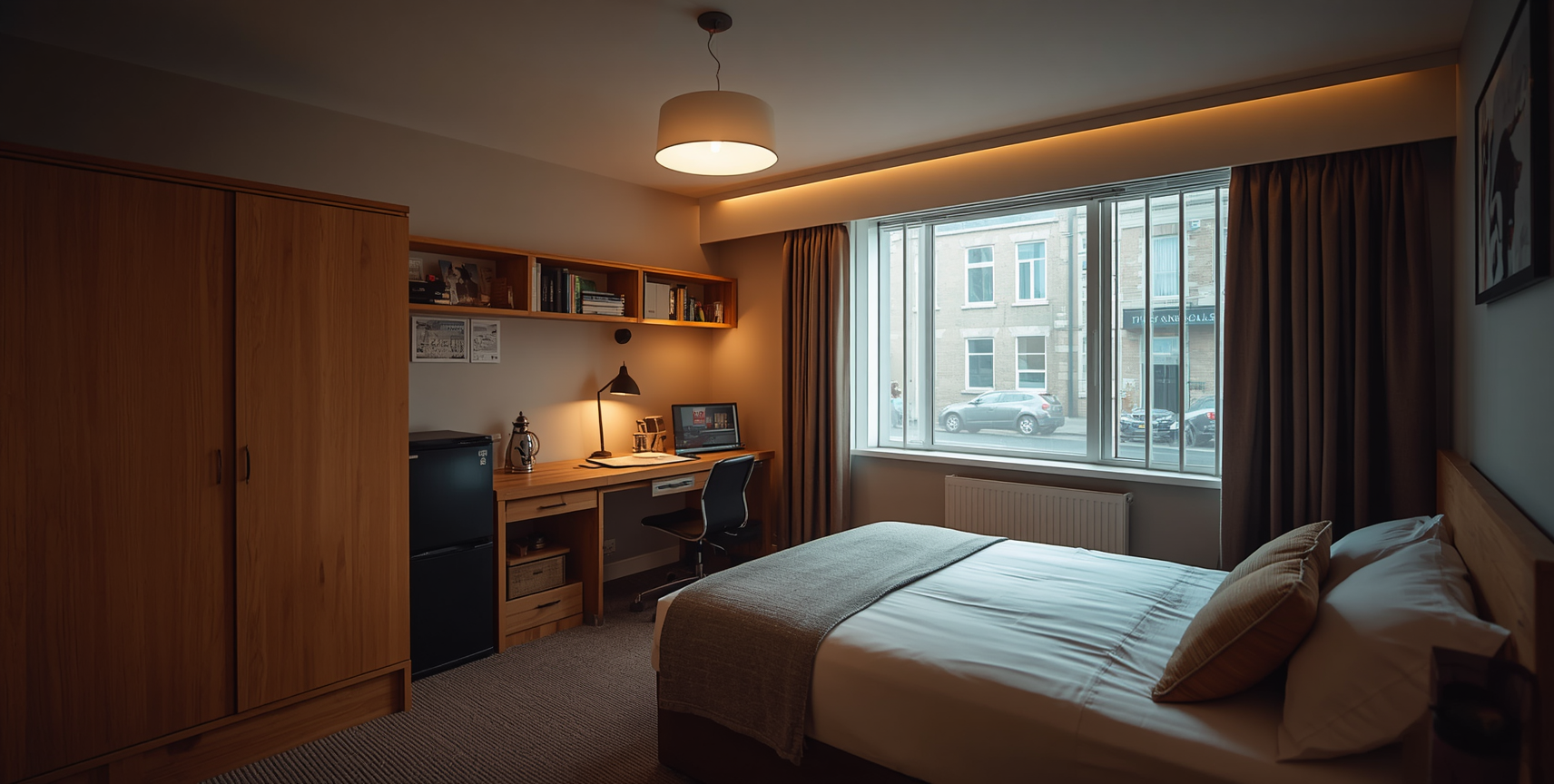
Accommodation is often one of the biggest and most unpredictable costs for students in Ireland. Rent can vary a lot depending on the city, room type, distance from campus, and how early the student books. Students may choose options such as:
• university accommodation
• private student residence
• shared apartment
• homestay
• private room in a house share
• temporary accommodation while searching
Before finalising the budget, it is important to ask:
• Is accommodation guaranteed or only suggested by the university?
• Is rent paid monthly, per semester, or in advance?
• Is a security deposit required?
• Are electricity, heating, and internet included?
• Is the property close to campus, or will transport cost extra?
• Does the contract match the academic calendar?
Students should avoid travelling to Ireland without a clear accommodation plan. In many cases, the first few weeks become expensive because rent, deposit, and temporary stay costs can all come together at once.
• university accommodation
• private student residence
• shared apartment
• homestay
• private room in a house share
• temporary accommodation while searching
Before finalising the budget, it is important to ask:
• Is accommodation guaranteed or only suggested by the university?
• Is rent paid monthly, per semester, or in advance?
• Is a security deposit required?
• Are electricity, heating, and internet included?
• Is the property close to campus, or will transport cost extra?
• Does the contract match the academic calendar?
Students should avoid travelling to Ireland without a clear accommodation plan. In many cases, the first few weeks become expensive because rent, deposit, and temporary stay costs can all come together at once.
Visa, Registration, and Immigration Costs
Along with tuition and living expenses, students should also keep part of the budget aside for visa and immigration-related costs. Indicative official visa fees are:
| Item | Indicative Official Fee |
|---|---|
| Single-entry visa | EUR 60 |
| Multi-entry visa | EUR 100 |
| Transit visa | EUR 25 |
In addition to the visa fee, students may also need to pay for document submission, courier service, biometrics-related services where applicable, and other local processing charges. Students staying in Ireland for more than 90 days usually need to register their immigration permission after arrival. The registration fee is commonly around EUR 300, but students should always check the latest fee, appointment process, and document requirements before travelling.
Proof of Funds for Ireland Student Visa
Students applying for an Ireland student visa must show that they can support themselves financially without depending on casual part-time work. For academic courses starting after 1 July 2023, Irish immigration guidance says students must show immediate access to at least EUR 10,000 for living costs for one academic year. In addition, students must also show how tuition fees and future study costs will be managed.
For courses shorter than eight months, students are generally expected to show EUR 833 per month of stay or EUR 6,665 in total , whichever is lower. It is important to understand that this is an immigration funding requirement, not the full cost of studying in Ireland. Your actual budget may be higher depending on tuition fees, accommodation, city, and lifestyle.
For courses shorter than eight months, students are generally expected to show EUR 833 per month of stay or EUR 6,665 in total , whichever is lower. It is important to understand that this is an immigration funding requirement, not the full cost of studying in Ireland. Your actual budget may be higher depending on tuition fees, accommodation, city, and lifestyle.
Health Insurance and Medical Costs
Private medical insurance is an important part of Ireland study planning for non-EU students. It is often needed for both visa and immigration purposes, so students should check what type of policy is accepted before travelling. Students should keep a budget for:
• private medical insurance
• basic prescriptions and non-covered treatment
• dental or optical care, if needed
• a small emergency medical buffer
Health insurance should not be treated as a last-minute formality. It is part of responsible student planning and financial safety.
• private medical insurance
• basic prescriptions and non-covered treatment
• dental or optical care, if needed
• a small emergency medical buffer
Health insurance should not be treated as a last-minute formality. It is part of responsible student planning and financial safety.
Can Part-Time Work Reduce the Cost?
Eligible students in Ireland may be allowed to work part time, but part-time income should not be treated as the main plan for funding education. Part-time work may help with:
• groceries
• local transport
• mobile and personal expenses
• day-to-day spending
• limited rent support
However, students should not rely on part-time work to pay tuition fees, show visa funds, or cover the full cost of living in Ireland. It is better seen as extra support rather than the foundation of the budget.
• groceries
• local transport
• mobile and personal expenses
• day-to-day spending
• limited rent support
However, students should not rely on part-time work to pay tuition fees, show visa funds, or cover the full cost of living in Ireland. It is better seen as extra support rather than the foundation of the budget.
Sample Budget Planning Framework
Before accepting an offer, it helps to prepare a simple written budget for the first year. This gives families a clear picture of how much money may be needed before departure and after arrival.
| Budget Line | Year 1 Planning Question |
|---|---|
| Tuition | What is the exact first-year fee after scholarship or discount? |
| Deposit | How much must be paid before visa filing or admission confirmation? |
| Living cost | Has the family planned enough for food, transport, and day-to-day expenses? |
| Accommodation | What are the deposit, first rent payment, and setup costs? |
| Insurance | Is private medical insurance included in the budget? |
| Visa and IRP | Have visa, service, and immigration registration costs been included? |
| Travel | Are flight, baggage, and airport transfer costs covered? |
| Emergency buffer | Is there extra money for delays, rent changes, or unexpected expenses? |
A written budget helps families plan with more confidence and reduces last-minute financial stress after admission.
How to Reduce Ireland Study Costs Safely
Students can reduce study costs in Ireland by making smart choices early, without compromising the quality of their education. Useful ways to manage the budget include:
• applying early for scholarships
• comparing tuition fees across universities
• comparing cities and accommodation types
• choosing a course with strong career value
• planning the budget before paying non-refundable deposits
• using student discounts where available
• improving skills before arrival for part-time and internship readiness
• cooking at home instead of depending heavily on eating out
The goal is not to choose the cheapest option. The better approach is to choose a course that is affordable, realistic, and aligned with the student's long-term career plans.
• applying early for scholarships
• comparing tuition fees across universities
• comparing cities and accommodation types
• choosing a course with strong career value
• planning the budget before paying non-refundable deposits
• using student discounts where available
• improving skills before arrival for part-time and internship readiness
• cooking at home instead of depending heavily on eating out
The goal is not to choose the cheapest option. The better approach is to choose a course that is affordable, realistic, and aligned with the student's long-term career plans.
How Stack Learn Helps With Ireland Budget Planning

At Stack Learn, we believe study abroad planning should go beyond admission alone. Families also need clarity on the financial side before making a final decision. For students planning to study in Ireland, Stack Learn supports with:
• course and city comparison based on budget
• tuition and living-cost planning
• visa proof-of-funds preparation
• parent budget discussions
• scholarship guidance where applicable
• pre-departure money planning
• part-time work readiness
• CV, LinkedIn, and interview preparation
Studying in Ireland is both an academic decision and a financial commitment. Our goal is to help students and parents understand both clearly before the journey begins.
• course and city comparison based on budget
• tuition and living-cost planning
• visa proof-of-funds preparation
• parent budget discussions
• scholarship guidance where applicable
• pre-departure money planning
• part-time work readiness
• CV, LinkedIn, and interview preparation
Studying in Ireland is both an academic decision and a financial commitment. Our goal is to help students and parents understand both clearly before the journey begins.
Frequently Asked Questions
Is Ireland expensive for Indian students?
— Ireland can be moderately to highly expensive depending on the city, accommodation, and course. Dublin is usually costlier than many other locations, so students should budget carefully.
How much does it cost to live in Ireland as a student?
— Education in Ireland estimates average living costs around EUR 10,000 to EUR 16,000 per year, depending on lifestyle, accommodation, and location.
How much proof of funds is required for Ireland student visa?
— For academic courses beginning after 1 July 2023, visa-required students must show immediate access to at least EUR 10,000 for one academic year, plus access for later years and course fees. Always check the latest official amount before applying.
Can part-time work cover my expenses in Ireland?
— Part-time work can help with some living expenses, but students should not depend on it for tuition or visa funds. Jobs, hours, and income are not guaranteed.
Are scholarships available in Ireland?
— Yes, scholarships may be available through institutions, government schemes, or specific programs. Eligibility, amount, and deadlines vary.
— Ireland can be moderately to highly expensive depending on the city, accommodation, and course. Dublin is usually costlier than many other locations, so students should budget carefully.
How much does it cost to live in Ireland as a student?
— Education in Ireland estimates average living costs around EUR 10,000 to EUR 16,000 per year, depending on lifestyle, accommodation, and location.
How much proof of funds is required for Ireland student visa?
— For academic courses beginning after 1 July 2023, visa-required students must show immediate access to at least EUR 10,000 for one academic year, plus access for later years and course fees. Always check the latest official amount before applying.
Can part-time work cover my expenses in Ireland?
— Part-time work can help with some living expenses, but students should not depend on it for tuition or visa funds. Jobs, hours, and income are not guaranteed.
Are scholarships available in Ireland?
— Yes, scholarships may be available through institutions, government schemes, or specific programs. Eligibility, amount, and deadlines vary.
Conclusion
The cost of studying in Ireland includes tuition, living expenses, accommodation, visa costs, registration, health insurance, travel, and emergency funds. A successful Ireland plan starts with a realistic family budget.
Stack Learn helps students plan Ireland study options with course fit, visa readiness, budget clarity, pre-departure preparation, and career readiness in one roadmap. If Ireland is on your list for 2026, speak with Stack Learn before you commit financially.
Stack Learn helps students plan Ireland study options with course fit, visa readiness, budget clarity, pre-departure preparation, and career readiness in one roadmap. If Ireland is on your list for 2026, speak with Stack Learn before you commit financially.