
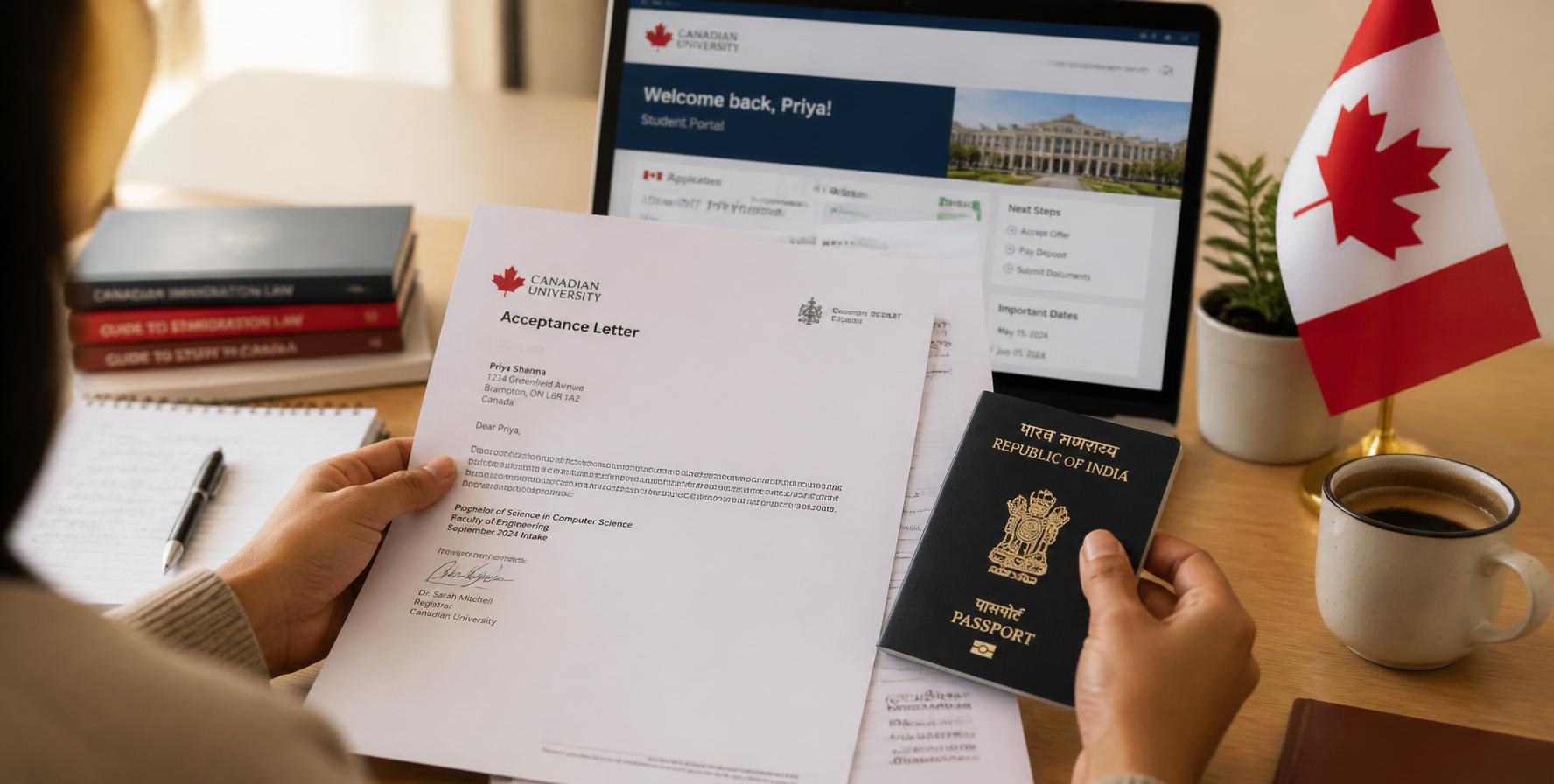
Canada remains a strong study-abroad destination for Indian students, but the visa process is now more document-driven and outcome-focused than many families expect. A student should not choose a college or university only because admission looks easy. The real question is whether the institution, program, finances, career pathway, and post-study options make sense together.
This guide explains the Canada study permit process for 2026 in a practical order. It is written for students applying from India and for parents who want to understand what must be prepared before money, time, and hopes are committed.
This guide explains the Canada study permit process for 2026 in a practical order. It is written for students applying from India and for parents who want to understand what must be prepared before money, time, and hopes are committed.
Canada Student Visa or Study Permit: What Students Should Know
Students often say "Canada student visa", but the key permission is a study permit. In most cases, students need to be accepted by a designated learning institution, commonly called a DLI, before applying.
According to IRCC, you generally need to show that you:
- are enrolled at a DLI
- have enough money for tuition, living expenses, and return transportation
- obey the law and have no criminal record, if a police certificate is requested
- are in good health, if a medical exam is required
- can satisfy the officer that you will leave Canada when your permit expires
That last point does not mean you cannot later explore legal post-study work or immigration pathways. It means your study permit application must still show a genuine academic purpose, clear financial capacity, and a responsible plan.
According to IRCC, you generally need to show that you:
- are enrolled at a DLI
- have enough money for tuition, living expenses, and return transportation
- obey the law and have no criminal record, if a police certificate is requested
- are in good health, if a medical exam is required
- can satisfy the officer that you will leave Canada when your permit expires
That last point does not mean you cannot later explore legal post-study work or immigration pathways. It means your study permit application must still show a genuine academic purpose, clear financial capacity, and a responsible plan.
Step 1: Choose a DLI and Check PGWP Relevance Early

The first visa step happens before the visa application. Choose the right institution and program.
A DLI is an institution approved to host international students. But not every program at every institution leads to the same post-study possibilities. If your long-term plan includes working in Canada after graduation, check whether the institution and program are relevant for Post-Graduation Work Permit planning.
Before accepting an offer, students should ask:
- Is the institution a DLI?
- Is the program aligned with my academic background?
- Does the program support my career goal?
- Is the program PGWP-relevant for my situation?
- What is the total cost for tuition, living expenses, health insurance, travel, and emergency funds?
- What career services, co-op, internship, or work-integrated learning options are available?
This is where Stack Learn's difference matters. We do not treat admission as the finish line. The better question is whether the course helps the student build a future after arriving.
A DLI is an institution approved to host international students. But not every program at every institution leads to the same post-study possibilities. If your long-term plan includes working in Canada after graduation, check whether the institution and program are relevant for Post-Graduation Work Permit planning.
Before accepting an offer, students should ask:
- Is the institution a DLI?
- Is the program aligned with my academic background?
- Does the program support my career goal?
- Is the program PGWP-relevant for my situation?
- What is the total cost for tuition, living expenses, health insurance, travel, and emergency funds?
- What career services, co-op, internship, or work-integrated learning options are available?
This is where Stack Learn's difference matters. We do not treat admission as the finish line. The better question is whether the course helps the student build a future after arriving.
Step 2: Get Your Letter of Acceptance and PAL or TAL
Once a student is accepted, the institution issues a letter of acceptance. For many students, a provincial attestation letter or territorial attestation letter may also be required. In Quebec, students may need a Quebec Acceptance Certificate.
Your document set may include:
- valid passport
- letter of acceptance from a DLI
- PAL, TAL, or CAQ if required
- proof of financial support
- academic transcripts and certificates
- English language test results, if required by the institution or visa process
- medical exam confirmation, if required
- police certificate, if requested
- photographs and forms
- biometrics appointment details
- statement or explanation of study plan, where relevant
The safest approach is to prepare documents in a clean folder by category: identity, academics, admission, finances, health, and study purpose.
Your document set may include:
- valid passport
- letter of acceptance from a DLI
- PAL, TAL, or CAQ if required
- proof of financial support
- academic transcripts and certificates
- English language test results, if required by the institution or visa process
- medical exam confirmation, if required
- police certificate, if requested
- photographs and forms
- biometrics appointment details
- statement or explanation of study plan, where relevant
The safest approach is to prepare documents in a clean folder by category: identity, academics, admission, finances, health, and study purpose.
Step 3: Prepare Proof of Funds Carefully

IRCC requires students to prove they have enough money without depending on work in Canada. The proof must cover tuition, living expenses for the student and accompanying family members, and transportation.
For applications submitted on or after 1 September 2025, the IRCC living expense amount for one applicant outside Quebec is CAN$22,895, excluding tuition and transportation. Quebec has its own financial requirements through the provincial process.
Common proof of funds may include:
- proof of paid tuition or housing fees
- bank statements
- education loan documents
- Guaranteed Investment Certificate, if used
- scholarship or sponsorship letters
- proof of a Canadian bank account, if funds were transferred
- letters and supporting evidence from financial sponsors
Parents should not think of proof of funds as a formality. Officers may look for consistency between income, savings, sponsor profile, tuition, living cost, and course choice.
For applications submitted on or after 1 September 2025, the IRCC living expense amount for one applicant outside Quebec is CAN$22,895, excluding tuition and transportation. Quebec has its own financial requirements through the provincial process.
Common proof of funds may include:
- proof of paid tuition or housing fees
- bank statements
- education loan documents
- Guaranteed Investment Certificate, if used
- scholarship or sponsorship letters
- proof of a Canadian bank account, if funds were transferred
- letters and supporting evidence from financial sponsors
Parents should not think of proof of funds as a formality. Officers may look for consistency between income, savings, sponsor profile, tuition, living cost, and course choice.
Step 4: Submit the Application and Biometrics
Most students apply online. Once the application is submitted, the student may need to provide biometrics and complete any requested medical or additional document steps.
Students should avoid these common mistakes:
- submitting a weak or generic study plan
- choosing a program that does not connect to past education or future goals
- showing funds without explaining source and availability
- ignoring PAL, TAL, or CAQ requirements
- assuming part-time work can cover the full cost
- hiding previous refusals or gaps
- uploading unclear scans or mismatched documents
A complete application is not just a checklist. It should tell a consistent story: why this course, why Canada, why this institution, how the family can fund it, and what the student plans to do with the qualification.
Students should avoid these common mistakes:
- submitting a weak or generic study plan
- choosing a program that does not connect to past education or future goals
- showing funds without explaining source and availability
- ignoring PAL, TAL, or CAQ requirements
- assuming part-time work can cover the full cost
- hiding previous refusals or gaps
- uploading unclear scans or mismatched documents
A complete application is not just a checklist. It should tell a consistent story: why this course, why Canada, why this institution, how the family can fund it, and what the student plans to do with the qualification.
Step 5: Understand Work Conditions Before You Travel
Canada allows eligible students to work, but work is regulated. As of the official information checked for this article, eligible students may work off campus up to 24 hours per week during regular academic terms and full-time during scheduled breaks. Students can only start working after their study program begins.
You may also need a Social Insurance Number before working. Your study permit must include the right work conditions.
This is an important planning point. Part-time work can support experience, confidence, communication skills, and local exposure. It should not be treated as the main source for tuition or survival.
You may also need a Social Insurance Number before working. Your study permit must include the right work conditions.
This is an important planning point. Part-time work can support experience, confidence, communication skills, and local exposure. It should not be treated as the main source for tuition or survival.
Canada Study Permit Timeline: When Should You Start?
A realistic planning timeline is:
- 12 to 15 months before intake: shortlist country, course, budget, and career goal
- 9 to 12 months before intake: apply to institutions
- 6 to 9 months before intake: receive offers and compare total cost
- 4 to 6 months before intake: prepare financial documents and visa file
- 3 to 4 months before intake: submit study permit application if documents are ready
- after approval: book travel, accommodation, and pre-departure training
Do not wait until the last month. Visa, funding, accommodation, and course decisions become stressful when rushed.
- 12 to 15 months before intake: shortlist country, course, budget, and career goal
- 9 to 12 months before intake: apply to institutions
- 6 to 9 months before intake: receive offers and compare total cost
- 4 to 6 months before intake: prepare financial documents and visa file
- 3 to 4 months before intake: submit study permit application if documents are ready
- after approval: book travel, accommodation, and pre-departure training
Do not wait until the last month. Visa, funding, accommodation, and course decisions become stressful when rushed.
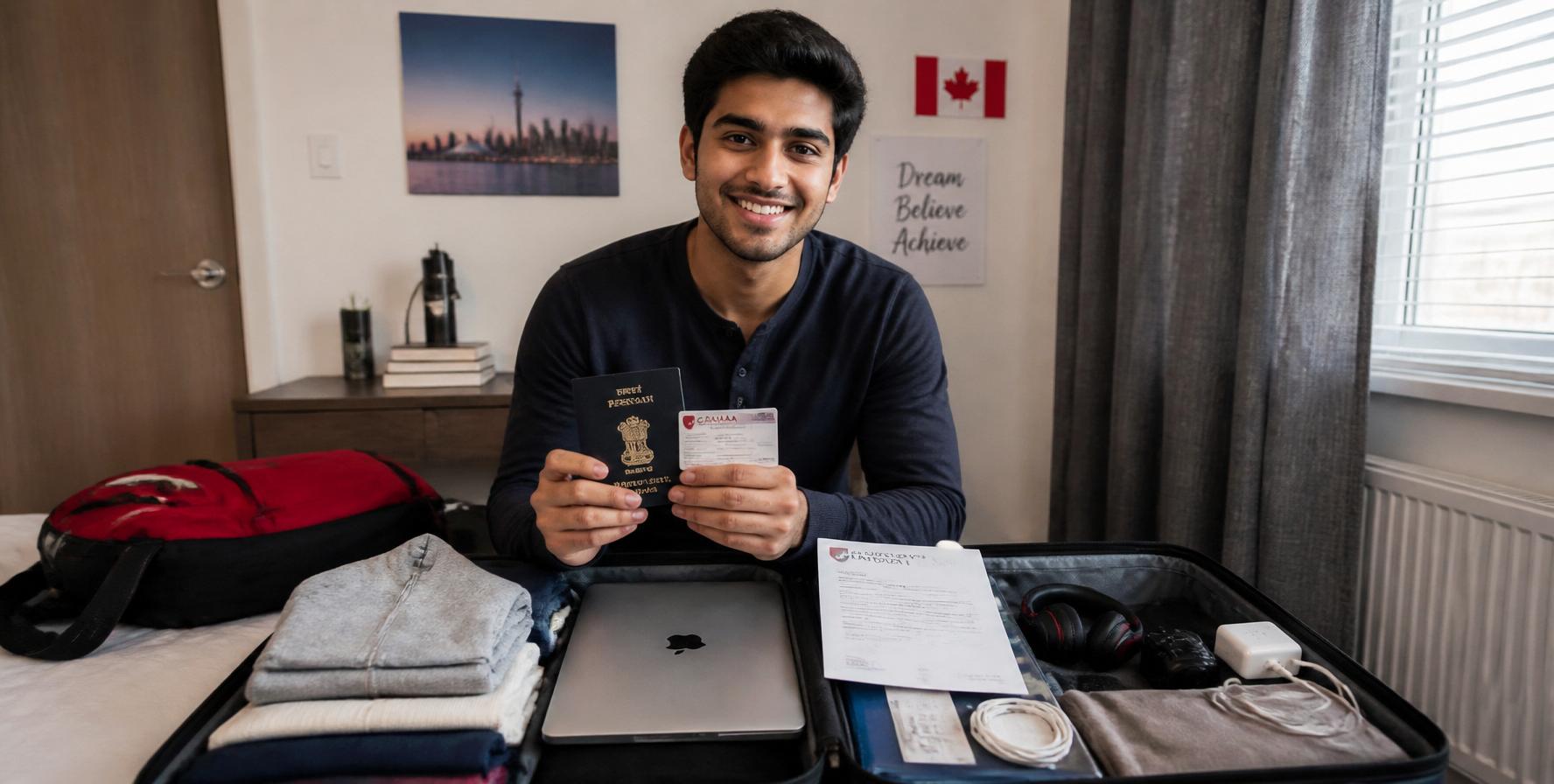
How Stack Learn Helps Students Prepare Better
Many consultancies focus on offer letters and visa filing. Stack Learn is different because we connect admission with employability.
For Canada-bound students, that means:
- checking course fit before application
- helping students understand visa and proof-of-funds logic
- preparing students for academic and workplace expectations
- building CV, LinkedIn, interview, and communication readiness
- helping families compare cost, course, and career return
- preparing students for life after arrival, not only departure
Canada rewards students who plan early, stay compliant, and build skills steadily.
For Canada-bound students, that means:
- checking course fit before application
- helping students understand visa and proof-of-funds logic
- preparing students for academic and workplace expectations
- building CV, LinkedIn, interview, and communication readiness
- helping families compare cost, course, and career return
- preparing students for life after arrival, not only departure
Canada rewards students who plan early, stay compliant, and build skills steadily.
Frequently Asked Questions
• Is a Canada student visa the same as a study permit?
— Students often use the phrase student visa, but the study permit is the main document that allows most international students to study in Canada.
• How much money do I need for a Canada study permit?
— You must show enough money for tuition, living expenses, and transportation. For applications on or after 1 September 2025, the living expense amount for one applicant outside Quebec is CAN$22,895, excluding tuition and transportation.
• Can international students work in Canada?
— Eligible students can work under the conditions printed on their study permit. Off-campus work is generally limited during academic terms and allowed full-time during scheduled breaks.
• Does every Canadian college course lead to PGWP?
— No. Students should check the institution, program, and current PGWP rules before accepting an offer.
• When should I apply for a Canada study permit?
— Apply only when your admission, financial documents, identity documents, and required attestation documents are ready. Starting several months before the intake is safer.
— Students often use the phrase student visa, but the study permit is the main document that allows most international students to study in Canada.
• How much money do I need for a Canada study permit?
— You must show enough money for tuition, living expenses, and transportation. For applications on or after 1 September 2025, the living expense amount for one applicant outside Quebec is CAN$22,895, excluding tuition and transportation.
• Can international students work in Canada?
— Eligible students can work under the conditions printed on their study permit. Off-campus work is generally limited during academic terms and allowed full-time during scheduled breaks.
• Does every Canadian college course lead to PGWP?
— No. Students should check the institution, program, and current PGWP rules before accepting an offer.
• When should I apply for a Canada study permit?
— Apply only when your admission, financial documents, identity documents, and required attestation documents are ready. Starting several months before the intake is safer.
Conclusion
The Canada student visa process is not only about submitting documents. It is about proving that your study plan is genuine, affordable, and connected to a realistic future.
The students who prepare best do three things early: choose the right course, organize finances honestly, and build career readiness before they land.
Planning to study in Canada? Book a consultation with Stack Learn to review your admission options, study permit readiness, budget, and career preparation plan before you apply.
The students who prepare best do three things early: choose the right course, organize finances honestly, and build career readiness before they land.
Planning to study in Canada? Book a consultation with Stack Learn to review your admission options, study permit readiness, budget, and career preparation plan before you apply.